
It’s strange how 28 Days Later feels both like the most influential horror film of the 21st century and a complete flash in the pan. In 2002, Danny Boyle and Alex Garland created something raw and feral, earning a modest box office on a small budget. Since then, it spawned a surprisingly strong sequel that earned negative reviews at the time, Garland became an acclaimed indie director, Boyle won an Oscar, and the film influenced every zombie film since, from Dawn of the Dead to The Last of Us (hell, The Walking Dead opens the exact same way).
Now, two decades after that first, haunting film, Boyle and Garland return to the franchise that put them on the map with 28 Years Later. The budget is bigger, the stars are bigger, and the scope and world are bigger. And yet, the saga’s roots – boots-on-the-ground filmmaking and small, deep, intimate themes – are still heavily on display. Boyle and Garland have spent two decades honing their crafts and skills, and have created a shocking nightmare that is equal parts haunting, visceral, poetic, and beautiful, all at the same time.
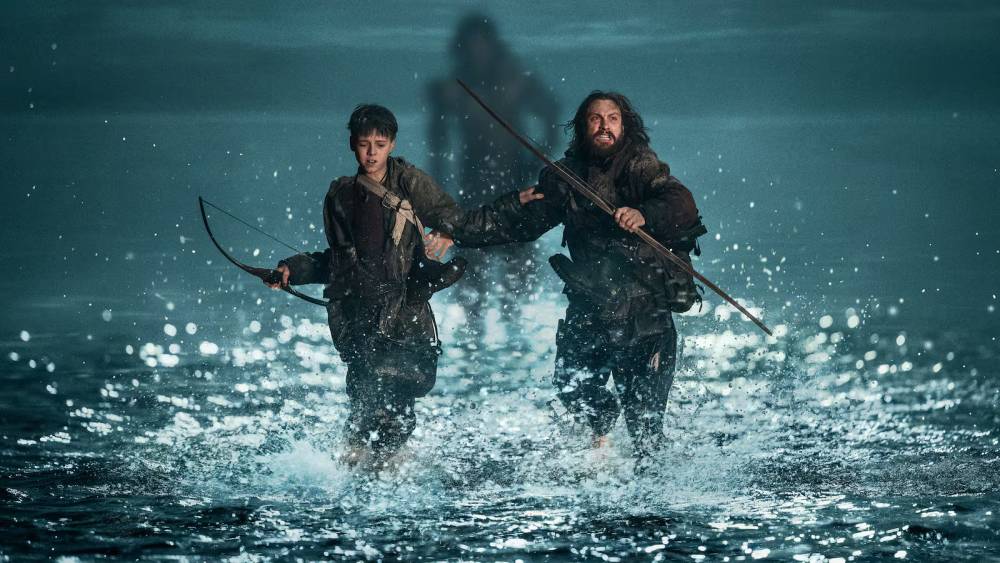
It’s been 28 years since the Rage virus decimated the U.K. Maintained within a quarantine and forgotten by the outside world, survivors have managed to thrive on a small island off the coast of Britain, accessible only by a thin causeway. On this island, young Spike (Alfie Williams) lives with his father Jamie (Aaron Taylor-Johnson) and sick mother, Isla (Jodie Comer). After his coming-of-age celebration and a sickening discovery, Spike decides to trek with his mother alone through Infected-infested countryside to find the last living doctor in the nation, Kelson (Ralph Fiennes), in an attempt to save her life.
28 Years Later is a surprising sequel as, in many ways, it feels like an experiment in how the filmmakers have grown and stayed the same in the last two decades. The appeal of the 2002 classic was in its gritty, nasty aesthetic. Quick, choppy edits leaving the viewer sickly; boots-on-the-ground cinematography that implied a visceral, real evil; a metal-punk score that felt angry and electrifying. Boyle uses many of these same techniques here, demonstrating the directorial style he has honed over almost 30 years, from Trainspotting to Trance, yet still finding new ways to elevate his own style.
For the first time in this series – and perhaps in Boyle’s entire career – the style feels less like an aesthetic choice meant to reflect the emotional reality and more a thematic statement. Inside the choppy editing are freeze frames for each and every kill (human or Infected), intercut with scenes from patriotic historical films juxtaposed with the hunting of Infected. And the cameras – now including iPhones and handi-cams meant to create the most visceral zombie chases possible are stunning – this may be the most definitive proof I’ve seen to date of digital cinematography’s effectiveness.
Beyond this, however, Boyle and Garland have crafted a rich horror film that works on every level. Their screenplay and visuals layer themes of isolationism in the wake of Brexit, the pain of growing up and losing the nostalgia of your hometown and father, a scathing critique of British colonialism, and mankind’s inherent violence throughout the ages. Hell, one late-breaking twist consisting of simply a costume choice that, in one short cliffhanger, teases a condemnation of the entire British media system. Yet what makes 28 Years stand out amongst its contemporaries is its achingly humanist story.
The 28 franchise has been built upon the back of shockingly honest nihilism. 28 Days Later warns that humanity is truly evil. 28 Weeks Later warns that, perhaps worse, humanity is cowardly. Yet 28 Years Later offers a conflicting message that, ultimately, feels all the more beautiful in the face of utter bleakness: that humanity, despite its self-destructive nature, has the capacity to love. As horrific as the film’s most intense moments may be, what stands out are the moments of compassion. A touching moment between two mothers, one human and one Infected; a graveyard for those lost, regardless of status; and the importance of not only memento mori, but also memento Amori.
Boyle has always been an actors’ director, and here is now exception. Young Williams feels like a real find, capturing fear, grief, and disgust with realistic aplomb. Years plays as a coming-of-age fable, and he carries that story brilliantly. Comer is excellent (as always), carrying the film’s back half, while Taylor-Johnson is effective as a rugged, flawed father in the first. Between Nosferatu and Years, I’m beginning to change my mind on the actor. Edvin Ryding is hysterical and haunting as a Swedish soldier stranded on the island, hinting at the real world juxtaposed to the quarantined island. And I won’t say anything about Jack O’Connell’s performance, other than this is clearly the year he found his niche.
I do want to single out Ralph Fiennes’ performance as the mysterious Dr. Kelson. Posed the entire film as a mysterious threat of terrifying proportions, Fiennes’ emergence in the film’s third act works as a catalyst to everything Boyle and Garland wish to say. The film’s third act pivots thematically and emotionally, and it requires an actor of tremendous caliber to allow this transition. Fiennes shows up with a magical twinkle, a world-weary empathy, and delivers monologues about life and death with the same dedication, heart, and beauty most actors reserve for Shakespeare. It’s a tremendous performance, and one that posits he may have deserved the Oscar this past awards season.
28 Years Later is a daring act of filmmaking, equal parts riveting, ultracool adventure and testament to humanity’s best and worst moments. Few films have managed to balance vicious, brutal – dare I say cool? – filmmaking with thematically rich parables. One moment you’re cheering as a massive, naked zombie rips out a man’s head and spinal cord and wields it as a mace, the next you’re sobbing a boy’s struggle with the role of masculinity in the face of war and pestilence. It’s the type of epic, bravura blockbuster that so rarely exists nowadays, and feels like something we should feel lucky exists at all.
A-
28 Years Later is now playing in theaters nationwide


Add Comment