
Every filmmaker, deep down, hopes they’re making something daring. Narrative, documentary, short subject, they have a desire to make a film that will challenge audiences and authority, to sway hearts and minds, and to tell a lasting story that speaks to the past, the future, and the now. Most documentaries, no matter their subject, are ultimately (and perhaps disappointingly) safe; filmed with talking heads in a safe bubble away from their subject. The only documentary that has ever reached this level of true heart-changing danger was Harlan County USA, which showed the horrors of a coal mining company’s strikebreaking efforts so honestly and brutally the company tried to have director Barbara Kopple assassinated.
At long last, a new documentary has emerged that feels every bit as urgent, important, and dangerous, without losing its value as a cinematic experience. Chances are, you haven’t seen it; despite a crowdfunding effort to make it both eligible for the Oscars – ultimately winning Best Documentary – the film has not received a major release. No streaming service will carry it, no studio will release it, all because of the powers that be (and, perhaps, pressures from both the previous and current Administrations). One of its directors was nearly murdered just a few months ago, and one of the activists who worked on the project was assassinated quite recently. I speak, of course, of No Other Land, whose message and efforts to call out officially sanctioned apartheid – growing worse each passing day – feel urgent and raw in a way so few films feel possible.
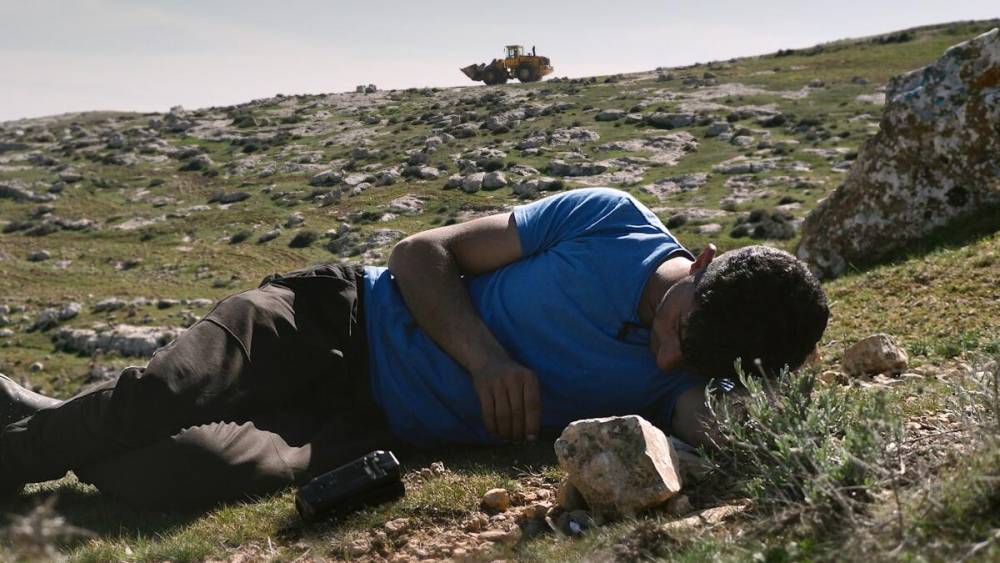
The genius of No Other Land is how it grounds itself in its protagonists, in terms of storytelling, humanity, and as a shield against biased critics. Basel Adra is a Palestinian activist who has been leading protests and posting videos about the struggles his family has faced for years, while Yuval Abraham is an Israeli journalist looking to expose the horrific actions sanctioned by his own government. They were brought together by the Mastafer Yatta crisis – the Israeli government’s attempt to cleanse the area of its ancestral inhabitants for “military training grounds,” in reality an attempt to replace the area with Israeli settlers willing to take the land by force.
Adra and Abraham often trade off their filming efforts to capture each other’s perspectives, and doing so crafts two potential narratives. On the surface, it crafts a story of resistance that challenges its storytellers as much as its audience. Abraham serves as a shield from bad faith actors challenging the film as “one-sided” by showing Israeli efforts to end the ethnic cleansing (and ultimately, the eventual war, which this film pre-dates). But it also allows the directors to challenge each other – and particularly Abraham, who captures the violence but very rarely finds himself on the receiving end like the Palestinians he films.
On a more human level, however, Adra and Abraham capture a narrative of combined forces and burgeoning trust and friendship to frame their story and draw in hope amongst viewers. Upon arrival, Adra, his family, his neighbors, and his fellow activists are wary of Abraham, unsure if he is actually there to help or has ulterior motives. His success in winning their trust and forming a bond with Adra serves as the film’s beating heart. It’s a testament to unity in the face of criminal atrocities, but narratively, it’s also a powerful tool. Audiences love a hopeful arc, and seeing two men of different ethnicities and upbringings provides a story they can connect to and root for.
Yet despite this hopefulness and its filmmakers’ impassioned personalities, this is not a simply happy film. This is a call to action, a document of horrors left underreported or misrepresented. Throughout the film, viewers witness a shocking array of horrific acts, up to and including war crimes. Unarmed protesters are shot and left paralyzed. IDF soldiers atand by and laugh as vigilante groups of settlers commit extrajudicial killings for sport. Homes of sick and disabled individuals are torn down, whether occupied or not. In one horrific scene, a funeral procession is interrupted when the IDF tosses a grenade into the marching women and children for fun.
As each sickening event unfolds, one asks themselves, “Why would they allow themselves to be filmed doing this?” Ultimately, the film answers that question: they don’t care. They will face no consequences from their own government, and until the world takes notice, they never will. And that’s why No Other Land is such an essential film. It forces us to grapple with harsh realities in an engaging, dynamic way. It’s important, yet never feels pedantic. And while the industry and those in power make it increasingly difficult to view this film, doing so isn’t just a necessary first step toward actual change. It’s a journey into a world of daring, exciting filmmaking, and what a small group with a camera can accomplish in the face of tyranny.
A+
No Other Land is unavailable in any theaters or streaming services. Sporadic screenings pop up throughout the country when available, select British sites do sell and rent the film, and the film’s official site occasionally rents the film – at the moment, it serves as donations for Palestinian activists wrongly arrested and cut off from food and shelter by the IDF


Add Comment