
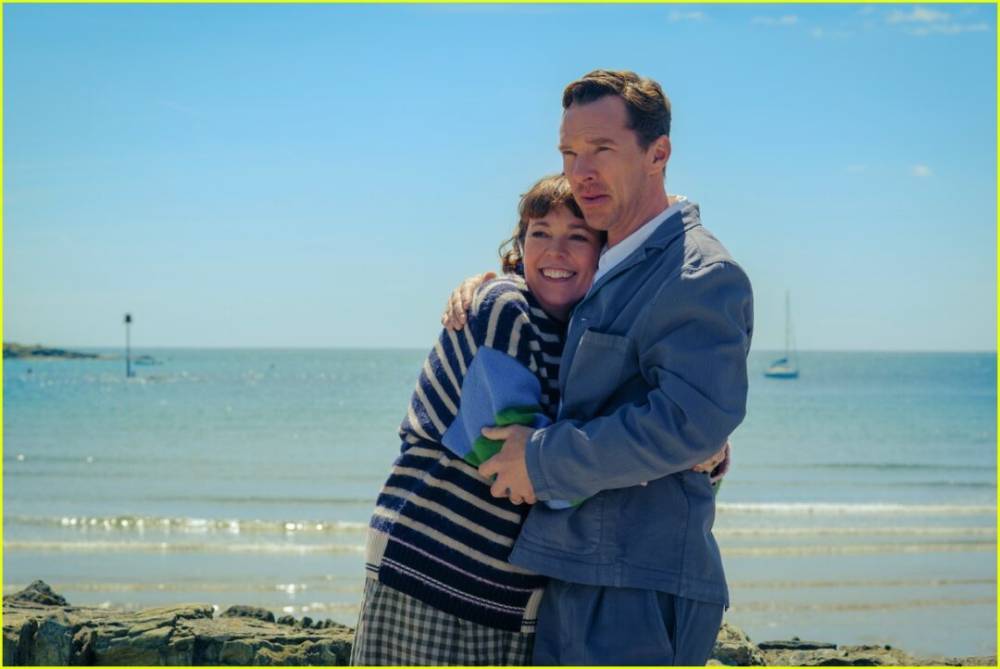
There’s nothing more frustrating than seeing great tools wasted on obvious studio interference. On paper, an adaptation of the classic divorce novel The War of the Roses by Tony McNamara, the Oscar-nominated writer of The Favourite, Poor Things, and The Great, should be a slam dunk. Especially when teamed with actors of the caliber of Benedict Cumberbatch and Olivia Colman. In theory, not even director for hire Jay Roach could sabotage this film. However, while flashes of brilliance exist beneath the surface, there are too many flat jokes, cliched contrivances, and moments of blatant studio interference to allow The Roses to ever fully bloom.
Many years ago, Theo (Cumberbatch) and Ivy (Colman) have a whirlwind romance spanning from Britan to California. Now married with two children (Delaney Quinn and Ollie Robinson as children, Hala Finley and Wells Rappaport as teens), the two have found their rhythm, with Theo working as a successful architect and Ivy giving up her culinary dreams to watch the kids. But one night, a freak storm flips everything on its head: Theo is left unemployed and unhirable, while Ivy impresses a food critic and launches a seafood empire. With their roles flipped, resentments and jealousies start to brew, and soon a once-happy marriage comes to a violent conclusion.
The strange thing about The Roses is how it feels like a relic of the 90s – and not just because of the throwback opening title sequence. So much of this film feels as though it were written decades before the present, sanding out any modern or timeless views on love, relationships, and gender roles. While McNamara is the solely credited writer, I don’t know if I can even fault him. So many edges and plotlines have been sanded down, it seems entirely likely that the studio (and perhaps Roach himself), took out any attempt at analysis and character development to explore gender roles both outdated in concept and performance. Frankly, it feels less like War of the Roses and more like Mr. Mom.
But this interference extends far beyond outdated ideas without edge or insight. The entire film evokes a hackneyed comedy without any sense of ingenuity. McNamara’s The Great explored the very nature of love and hate, filled with vulgar, violent, and utterly romantic outbursts. Here, while the stars have a way of making the vulgarity ring true (the British accents certainly help), so much feels like a studio exec’s idea of what’s funny, as opposed to letting the universality build jokes. Buildings are named “We’ve got crabs.” Oftentimes the obscenity is the joke, as opposed to the flavoring. Toilet humor is the name of the game. It all feels lazy, and loses the story’s relatable core.
And it’s a real shame, because when McNamara’s story sings, it really sings. McNamara has flipped the story to explore the way relationships go cold, when the sarcasm risks becoming real, and when stubborn partners dig in rather than apologize. While the miscommunications border on contrivances rather than natural progressions, they do allow the story to build to nasty, brilliantly written fights that feel borne out of real slights, frustrations, and jealousies. Ivy’s story may be sanded down to imply women regret choosing careers over their children (and really only a few short years, not their entire lives), but feeling she’s lost their connection is real. Ditto Theo’s feelings of abandonment during a time of crisis. In these moments, the script sings, and implies a better film.
Of course, this may be due to the actors, who give their all to the story, both the drama and the subpar comedy. Colman is the true star here, already a natural to McNamara’s patter, yet Cumberbatch holds his own, hurling insults and conveying a man driven to his breaking point. The rest of the cast, however, feels bogged down by stock character stereotypes and untethered improvisation. Allison Janney elevates the shoddy material she’s been given Kate McKinnon gives herself wholly, and Andy Samberg just tries to survive. Other stellar actors and comedians, including Ncuti Gatwa, Jamie Demetriou, Sunita Mani, and Zoe Chao barely register, buried under the burden of underwritten, unmemorable characters.
The Roses is an utterly frustrating, if not wholly unwatchable film. It’s the perfect testament to what an evil studio exec can do to a good idea. Moments of brilliance wasted, lost forever under jokes about shaving toe warts into food or YouTube mashups. It’s hard to write the film off completely, due to the moments of sharp writing, great performances, and delightfully bleak ending. But so much of the 105-minute runtime feels so wasted, so condensed, and so insulting to its audience, one finds themselves asking the same question as the characters: am I happy, or am I just comfortable?
C
The Roses is now playing in theaters nationwide


Add Comment