
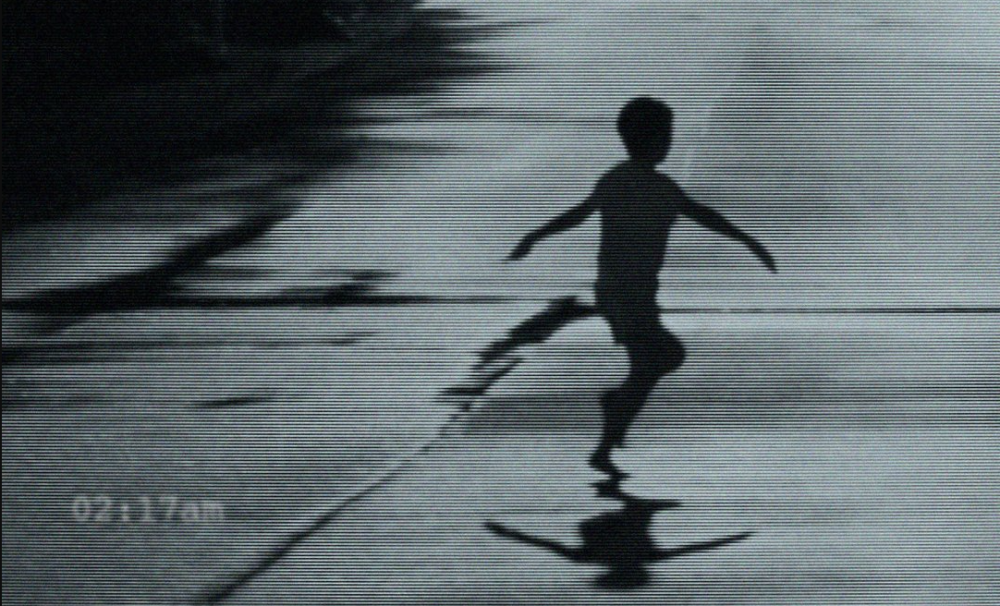
The last decade of horror filmmaking has borne from the “elevated” subgenre; stories where grief and emotions are the point, beyond scares or thrills. There’s been some masterpieces, some big swings, and some disasters along the way. However, while horror will always involve our basest fears and commentary about life and society, there’s been a sense of yearning for something more…straightforward. A feral, ferocious look at the idea of terror meant to shake us to our core (and perhaps cheer a little, too). In 2022, Zach Cregger burst onto the scene with Barbarian, essentially a haunted house thriller that took the world by storm. He’s now back with Weapons, a larger-scale nightmare; one where, as the layers peel back, the simplicity becomes its greatest asset.
On a seemingly ordinary Wednesday in the town of Maybrook, Pennsylvania, seventeen third-grade students awoke in the middle of the night and ran off into the dark, disappearing without a trace and leaving behind only one student (Alex Lilly, played by Cary Christopher) and their teacher, Justine Gandy (Julia Garner). One month after the disappearance, the town is still grieving. Most still blame Justine, including the father of a missing student, Archer Graff (Josh Brolin), and everyone is desperate to find out what happened to the children. As they each embark on their own individual investigation, a world of new horrors, mysteries, and nightmares unfurls around them.
If Weapons is “about” anything, it is about the thin line between fear and grief, and how both affect already-flawed characters. The intercutting stories (think Pulp Fiction or Magnolia) give us glimpses of flawed characters all trying to survive in this world, making choices to process their grief in ways both healthy and unhealthy. A grieving father who veers towards harassment in his quest for answers. A caring teacher with a troubled past turning to the bottle and toxic choices to cope. A cop in recovery who makes a horrific mistake that leads to several missteps. A drug addict looking for his next score and bumbling into a horrifying secret. Each character’s grief, when compounded by their fears, unlocks a new horror, a new hurdle, and a new turn, in ways that are felt as opposed to interpreted.
But part of the brilliance of Cregger’s film is that ultimately, it isn’t any of those things. Yes, there are layers to the story that unveil a statement about modern American life. And there’s certainly a read of the film that speaks to paying attention to what’s going on in our children’s homes and the aftermath of a traumatic event that eliminates a generation of children in a school setting. But it’s no more the focus than the racist undertones of the suburbs were the focus of John Carpenter’s Halloween. Cregger is more interested in a more classic, subconscious level of fear, and he doesn’t need a veneer of “prestige” to do so.
The result of returning to the genre’s roots, all the way back to Grimm’s Fairy Tales, is strikingly profound. It is not an exaggeration to say that this may be the most frightening horror film in nearly a decade. There is something deeply unsettling in Cregger’s framing of this film; borderline evil, in a way few directors have ever successfully mastered. Each frame feels as though something frightening and ugly could burst through at any moment, oftentimes with characters unaware. It’s the simple fear of “what’s behind that creepy door,” of humans no longer acting like humans, of an evil we cannot understand. It’s the threat of something strikingly evil, leaving the pulse quickened, the heart pounding, and the fingers permanently laced over the eyes.
Utilizing his comedy background, Cregger has his audience search the frame for the next nightmare, often delivered in terror or a punchline. This sometimes means terrifying visuals of the children running, arms akimbo, across a Ring door camera. Othertimes, it means a terrifying figure stalking only to be revealed as an irate June Diane Raphael. And sometimes, it’s all of the above – Amy Magidan spends most of the first half of the film as a terrifying reveal (think Robert Blake in Lost Highway) before settling into a Sleepaway Camp-adjacent camp performance in the second. For the record, Madigan’s performance is pitch-perfect to the point of worthy Oscar consideration. It all indicates a master of the craft, walking a delicate tightrope to tremendous effect.
Beyond Madigan’s masterful performance, the actors all bring an added layer to their characters. Garner is truly remarkable as Justine, adding layers to a flawed, but compassionate teacher targeted by her town. Christopher is also excellent as young Alex – he is required to carry the film’s third act, and he is certainly up to the task. Benedict Wong perfectly captures a caring, but incapacitated principal, Alden Ehrenreich brings nuance to what could have been a manipulatively obtuse caricature, and Austin Abrams takes a comic relief drug addict and transforms him into the film’s secret weapon. Brolin also gives a strong performance, but he veers closer to camp than the rest of the actors. Still, he’s gifted enough to keep the ensemble expertly taut and both thrillingly and emotionally honed.
Weapons is a masterful, horrific nightmare unlike anything witnessed in recent years. The influence of the masters can be felt throughout – giallo, Japanese horror, the works of Carpenter, Craven, and David Lynch. Yet Weapons feels wholly original, like a new master has stepped onto the scene. It is a modern day fairy tale, a nightmare so thrilling you can’t help but dare to revisit. This is what horror can do at its best, and what cinema can do at its best. It can take you on a roller coaster, thrill you, challenge you, terrify you, and beyond, leaving you analyzing the material yet awash in the experience. This is one of the best films of the year, and a can’t-miss experience.
A-
Weapons is now playing in theaters nationwide


Add Comment