
Ed. Note: After publication, it was brought to my attention that Disney would not let any of these videos be shared. You can just click on the links if you want. Or don’t. They’re all just earworms anyway
You know, I have a funny story about trying to rank Disney films. My brother and I once tried to watch and review every Disney film from beginning to end during a summer vacation. The results alienated everyone we knew and lost us several friendships. Which is to say that there is a rabid cult surrounding Disney, and my attempts to rank them should only be seen as humorous and warm-hearted. I share all this because, as Animation Week continues, we find ourselves facing what will surely become one of my most controversial articles: the Top Ten Disney Animated Films of All Time.
I mean, I think the title there is pretty self-explanatory. This is a ranking of the best Disney films ever made, in terms of groundbreaking animation, simplicity of storytelling, thematic heftiness, iconic characters, memorable songs…you name it. I’m taking it all into account. But before we get to the list itself, I think we have to talk about the Honorable Mentions – a feature that will surely alienate people from the jump. I considered a lot of films for this list, as well as my ranking of the Underrated Disney Films last week – so if you don’t see your favorite there, maybe it received a shoutout already! I almost included Dumbo, an intentionally simple film that is undeniably heartwarming in execution. Lady and the Tramp is a surprisingly well-made rom-com, beautifully drawn and animated. While I’m not a huge One Hundred and One Dalmatians fan, Cruella De Ville is so iconic, I almost included it just for her. On the more recent end of the spectrum, both The Princess and the Frog and Zootopia are dazzling animated and expertly voiced. Moana features one of the best Disney princesses to date, along with worthwhile characters and animation. And by God, am I mad I couldn’t include Peter Pan, a film I absolutely loved as a child and still makes me giddy for about 95% of its runtime.
Oh, and because I’m sure I’ll get messages from people about a few other films, I should make it clear which ones I didn’t consider. Aladdin is one of the Mouse House’s most beloved films, but sorry to disappoint you: outside of Robin Williams’ perfect performance, the film is not good. In fact, you should probably just come to the understanding now that if Tim Rice is involved in your Disney film, you’re probably in trouble (with one exception). Bambi may be a dazzling feat of animation, but spoiler alert: it’s not very good in any other regard. Bambi is a boring character, his friends are obnoxious, and the only dynamic scene in the entire film is when his mother dies. Of course, as bad as Bambi is, Tarzan is worse. The first half, featuring exclusively animals, is pretty cool – also, I commend the filmmakers for opening on child murder – but once the humans arrive, it’s all downhill. Not to mention the fact that the Phil Collins songs are ear cancer. And then there’s Pocahontas, perhaps the ugliest looking Disney film to date, based on a fabricated story that romanticizes the kidnapping and enslavement of a 12-year-old girl. Pocahontas is unwatchable and anyone who calls it their favorite Disney movie should be branded with a red flag. Yes, yes, boo me all you want. Your tears make me more powerful. Now that all that negativity is out of the way, let’s get back to the positives: the Top Ten Animated Disney Movies Of All Time.
10. Cinderella
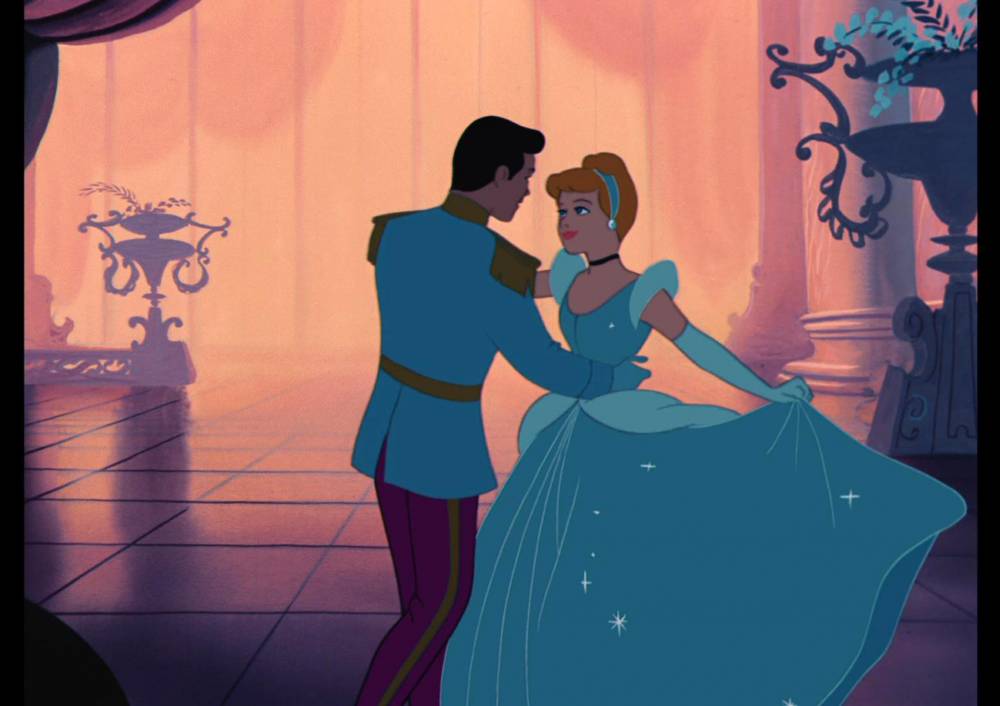
Cinderella as an answer feels so obvious it’s almost not worth including. But that’s simply because of the Walt Disney magic – it’s so simple, you overlook how expertly crafted and executed this film truly is. After all, the Cinderella story has been told hundreds of times – including this year, in hilariously awful fashion. And yet, despite how many times this story has been told, it is still this version, with the Fairy Godmother and the sparkling blue dress and the mouse sidekicks, that people remember. Cinderella should perhaps be remembered best as the first film that operated under a proper three-act structure – Snow White had a loose plot with lots of asides, and Bambi and Pinocchio were more episodic in nature. Cinderella is a fully-fledged story from beginning to end: a girl wants nothing more than to have one day of happiness and dance (not, as the joke purports, to meet a man), is harassed by two gorgon-esque stepsisters and a ruthless stepmother (Lady Tremaine stands tall as a Disney villain; cold and calculating in every way), and has her dreams come true based on the purity of her heart, thanks to her Fairy Godmother. The “Bibbity-Bobbity-Boo” sequence is Disney at its finest – funny and whimsical and warmhearted – and the characters are well-defined, from Cinderella’s beloved mice sidekicks (like Jaq and Gus), the put-upon Duke who really doesn’t want to get beheaded, and Lucifer the hilariously evil cat. This is pure romance, dazzlingly rendered, and it stands tall as one of Disney’s finest executions of a formula.
9. The Lion King
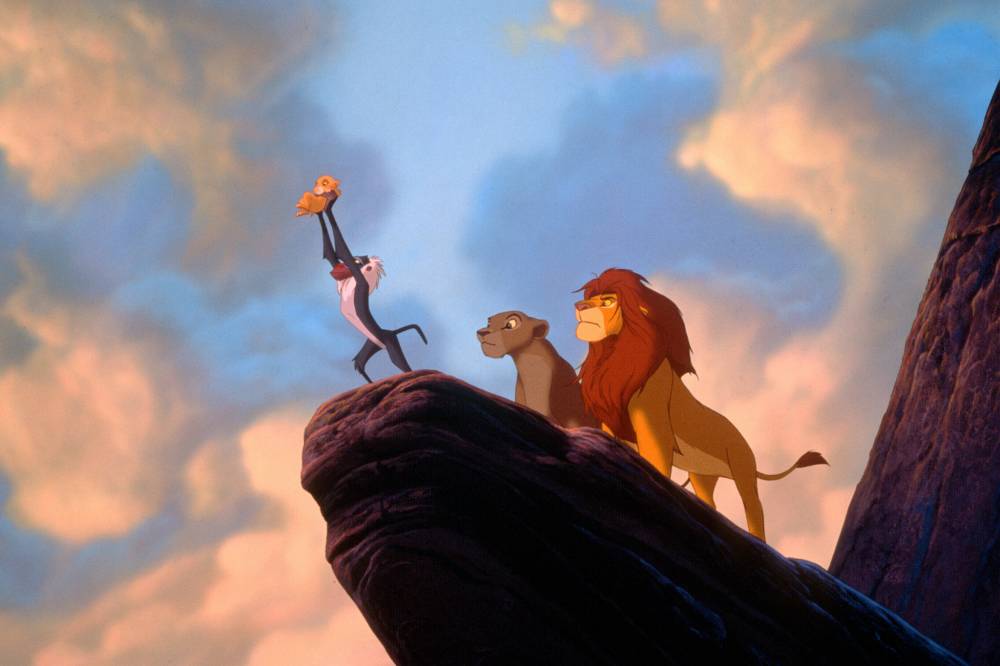
If you wanted or needed any proof that this list is objective and not subjective, my inclusion of The Lion King should set you at ease. I’ve never been a big fan of Disney’s Hamlet variation. Not sure why. But just because I’m not a huge fan doesn’t take away from the film’s legacy. After all, this is one of the biggest animated films of all time, in terms of size, scope, story, animation, and music. It will never not be funny that The Lion King was made by Disney’s “B-Team” because the A-Team was working on the “better film” – the atrocious Pocahontas. This is a fully-fledged story from beginning to end: a cocky protagonist who learns maturity (and voiced by two icons: Matthew Broderick and Jonathan Taylor Thomas), villainous schemes by the campy, drawling villain Scar (Jeremy Irons), a wise father figure who imparts advice and then passes away (voiced impeccably by James Earl Jones), and two slacker best friends filled with surprisingly good advice, the iconic Timon and Pumbaa (voiced to perfection by Nathan Lane and Ernie Sabella). The sheer look of this film is unlike anything we’ve seen before, from the vast plains to the desert canyons to a lovely moonlit oasis. And don’t get me started on “Circle of Life,” the greatest bit of animation Disney has ever done, and one of the most breathtaking openings in history. I have problems with that hack Tim Rice’s lyrics (not, of course, Elton John’s melodies), but I’d have to be blind and deaf to not appreciate The Lion King as the achievement that it is.
8. Frozen
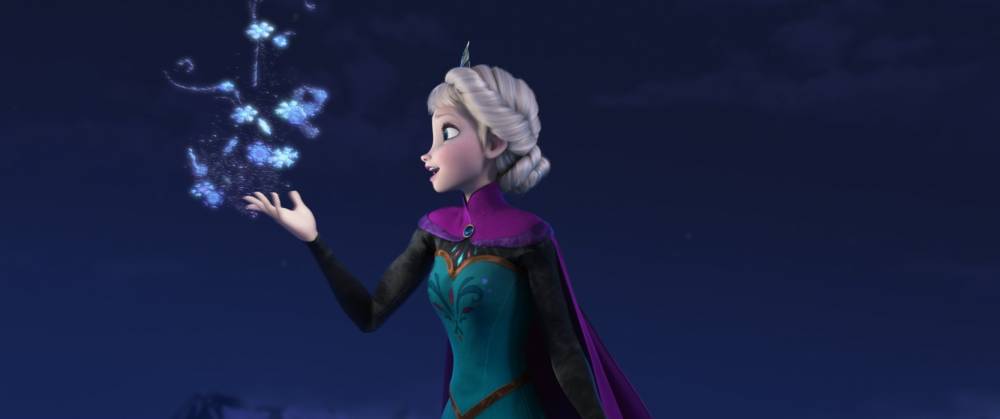
Last week, I noted that there were three Disney films with direct sequels, all of which would appear on this list. However, whereas Wreck-It Ralph and Winnie The Pooh were tied with their counterparts, as the sequels lived up to their predecessors’ expectations, Frozen II will not be on any of these lists; not only because it isn’t worthy, but because it in no way could live up to the glory of Frozen, one of Disney’s best animated, best written, and most musically adept films to date. It’s hard to praise Frozen – after all, between its status as the highest-grossing musical of all time, the impenetrable presence of “Let It Go,” and the full-scale merchandising, it feels like it’s already won. To quote Mad Men, “That’s what the money is for!” But let’s not beat around the bush: the reason Frozen was so successful is because it is so good. The snowy animation and attention to detail on the outfits is some of the best in the Disney canon – not to mention the only time CGI animation has looked this good. The story, jettisoning the traditional princess narrative for a love story between siblings and juxtaposing introverts and extroverts, has a lasting power the typical Disney romance cannot. The villainous twist is as devastating and gutting as the death of any Disney parent. And the music – my God, the music – is as Broadway-ready as any Menken and Ashman production, from the touching “Do You Want To Build A Snowman” to the grandiose “For The First Time In Forever” to, of course, “Let It Go,” which is as monumental a musical achievement as any other musical number Disney has created. Hell, even Olaf wasn’t annoying this time around – that came much later. So yes, as cliché as it is to say, Frozen is, indeed, one of Disney’s greatest films.
7. Pinocchio
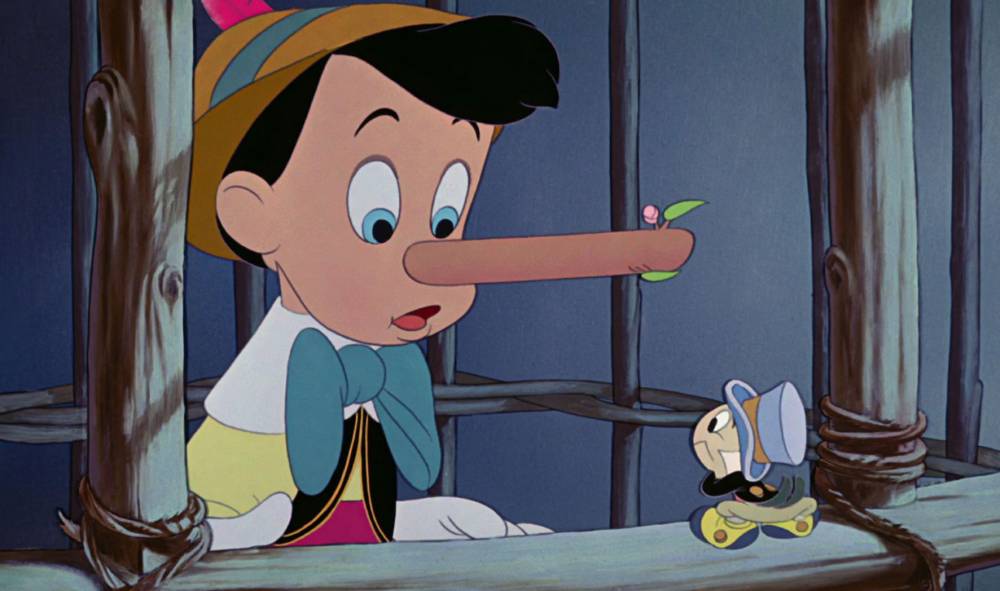
The second film in Disney’s lexicon, there was massive pressure put upon Pinocchio to live up to the expectations post-Snow White. Obviously, in 1940, it failed to meet those expectations, and the film was a box office flop. But that failure was merely a commercial catastrophe; on an artistic level, Pinocchio is a monumental accomplishment. The character of Pinocchio is sometimes hard to root for – his entire character arc is “obnoxious little brat who constantly screws up and needs to learn violent lessons.” But that’s exactly why Disney’s entry is so successful – arguably the best adaptation to date, no matter how many times Roberto Benigni tries. Disney carefully balances Pinocchio’s troublemaking ways with his naivete; he wants to be a good boy, and to become a real boy, but he puts his faith in the wrong people. He’s kidnapped by a monstrous puppet master, battles a giant whale, and, in one of the most terrifying moments in cinematic history, gets turned into a donkey while smoking a cigar and sent to the salt mines (I can still hear Lampwick and Alexander crying for their mothers in between brays in my nightmares). And yet, these trials make his inevitable transformation into a human by the Blue Fairy that much more rewarding. Disney creates a series of culture-defining images for audiences to relish in, dazzlingly conveying his ideas and themes in misleadingly simple images: Pinocchio’s ever-growing nose, a sophisticated cricket conscience who sings the legendary “When You Wish Upon A Star,” and anthropomorphic animals tricking children into becoming actors – a mortal sin, mind you. And in terms of furthering the genre, do yourself a favor and watch Snow White and Pinocchio back-to-back. Look at the way the movements have evolved in just three short years. Look at the attention to detail, and effort of characterization, and sheer emotion. Everything is elevated, striving to push the medium forward in every way.
6. The Little Mermaid
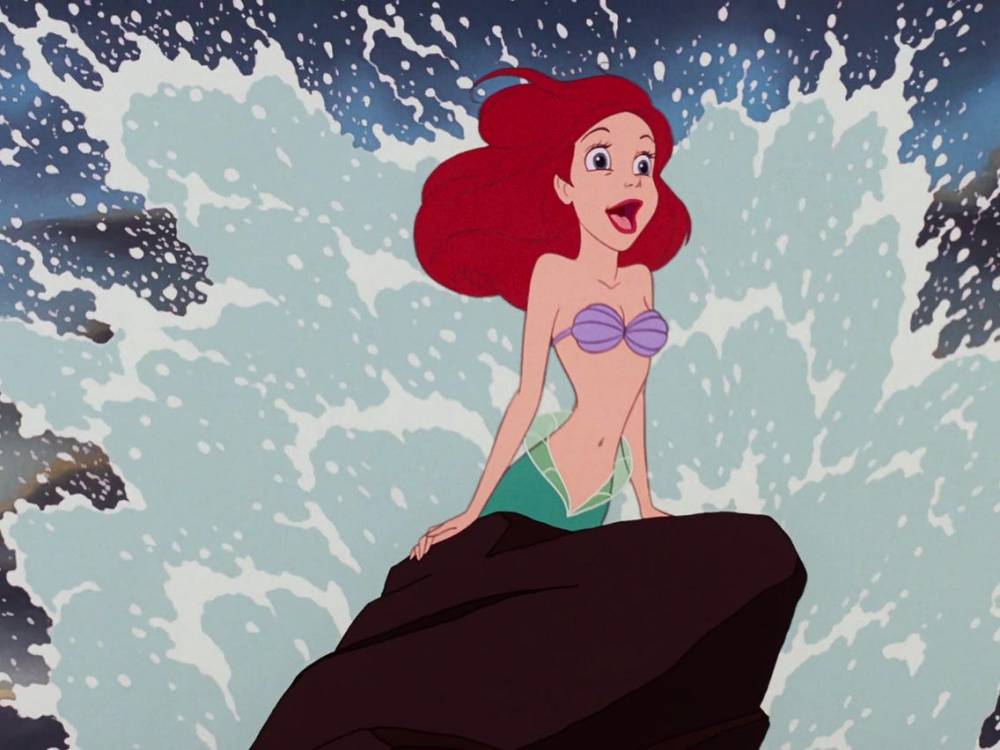
It seems rather simplistic to refer to The Little Mermaid as “the film that saved Disney.” And yet, it couldn’t be more true. Disney was on the verge of bankruptcy in the late 80s, having suffered a series of flops (despite some underrated classics mixed in for good measure), and if it weren’t for Mermaid’s success, it might have toppled for good. What makes The Little Mermaid so successful is the way that takes everything people had liked about Golden Age Disney films, and then upped the ante on every single facet. While Disney’s animation had always been impressive, it had never been so sumptuous, capturing the flow of hair underwater, incorporating complicated movements into the animals and creatures, and providing picturesque images in every frame. While fairy tale princesses had been a staple since the beginning, few Disney princesses were as three-dimensional as Ariel, voiced perfectly by Jodie Benson as a lovably flawed heroine who made choices both good and bad out of love. And while Disney had always incorporated music in its films, Mermaid is a full-fledged fledged musical, with Broadway-ready songs by the genius Alan Menken and Howard Ashman that stand tall in the world of movie musicals. Sure, the third act is a bit rushed, but when you’ve got great music, great characters (like Sebastian and Scuttle), and a villain as perfect as the drag-inspired Ursula, you can easily overlook it and note that The Little Mermaid is one of Disney’s finest outings.
5. Snow White and the Seven Dwarfs
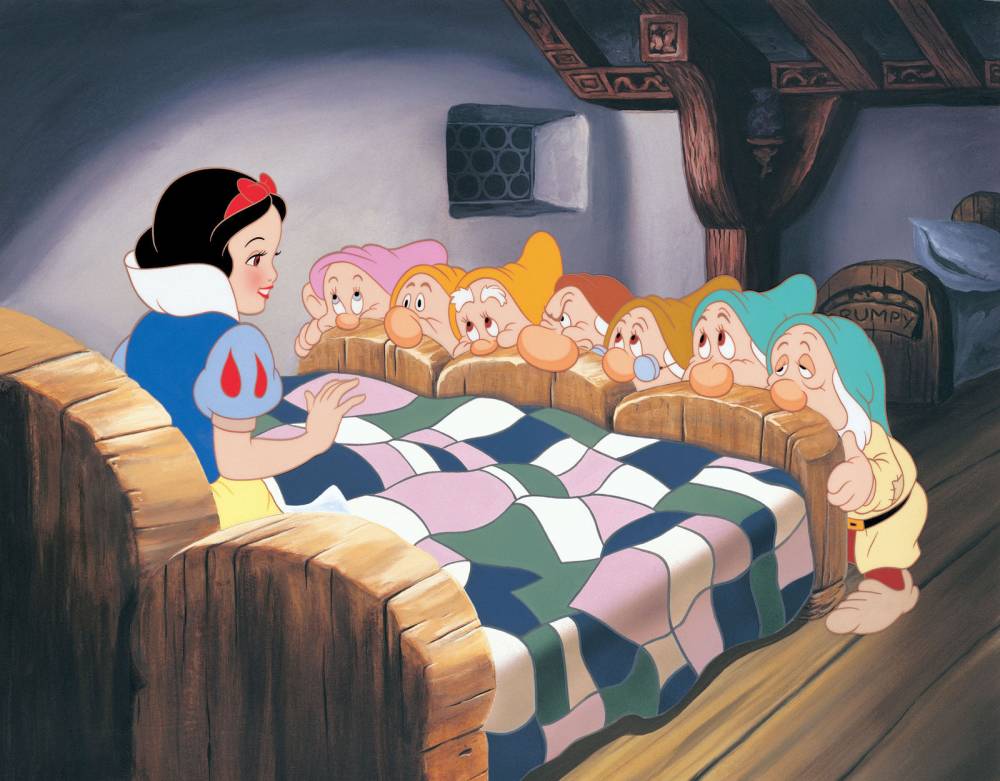
Of course we have to praise the granddaddy of them all, Snow White and the Seven Dwarfs. While it’s not quite the first feature-length animated film (the Germans and Chinese were doing that years before Walt Disney ever did), it is the first of its kind. No one was doing this kind of animation on this scale before, and there’s no denying that Disney knew exactly how to execute it to make it a hit. Snow White incorporates several different styles and genres to capture the look and feel of films of the era, including random musical sequences (resulting in the still-unbelievably great “Heigh Ho”), princes and princesses, including the admittedly-boring but ever-so-lovable Snow White, and terrifying villains that made audiences boo and hiss in their seats – let’s not forget that even before the Evil Queen turns herself into a hag with a poison apple, her original command was to cut out Snow White’s heart so she could eat it. And Disney also had the foresight to play with archetypes and whimsy, creating staples in the genre for years to come; there’s the archetypes of the dwarves, including a Harpo-esque Dopey and a gruff-with-a-heart-of-gold Grumpy, a fascination with quirky animal sidekicks, and grand visuals of lush landscapes that most rivals still struggle with. It may be American mythologizing to call Snow White the first animated film. But it was one of the first to do this kind of animation on this scale, and when combined with how great the final product turned out, it is impossible to deny it a place on this list.
4. Beauty and the Beast
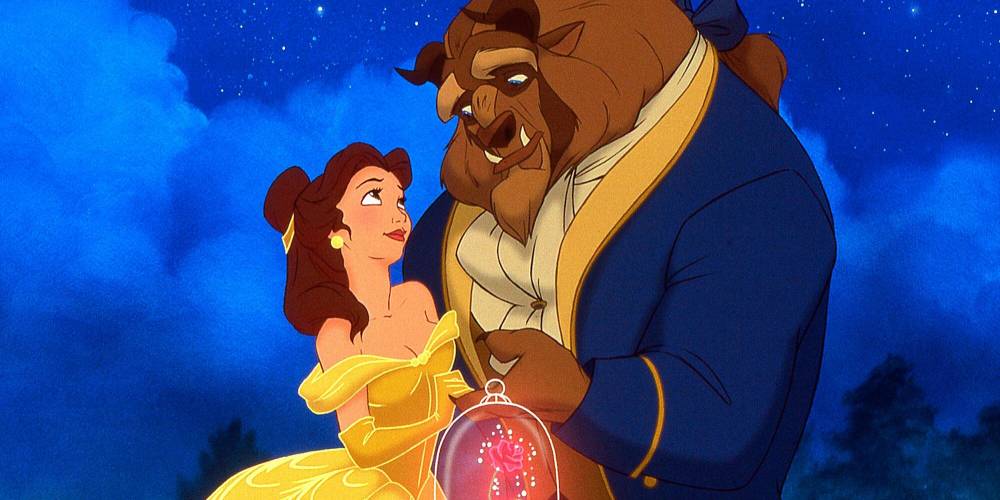
To date, only three animated films have ever been nominated for Best Picture. Two of them came when the field was expanded to ten. Only one film has ever done it on a list of five, and it’s because it is one of the greatest animated achievements of all time. I’m talking, of course, about Beauty and the Beast. On paper, this could be an interesting narrative to traverse: it involves the heroine being kidnapped by a monster, falling in love with her captor, and ultimately transforming him into a handsome prince through the power of love. And yet, Beauty and the Beast manages to avoid any of the story’s pratfalls by diving into the story’s deeper meanings, crafting a grandiose, epic backdrop with which to juxtapose the story, and giving it the attention of a fully-fledged musical epic. Belle is perhaps Disney’s greatest protagonist – fully realized in her thoughts and emotions, different from her closed-minded town and ok with it, and every bit as witty as her counterparts, be they a monstrous beast or an actual Beast (hyuck hyuck hyuck). The film stresses an importance of self-improvement, with both the Beast and Gaston starting in a place of aggressive toxic masculinity from which only The Beast emerges through compassion and curiosity. And it will never not be devastating to me that “The Mob Song,” a sequence where a group of small-minded villagers go to “kill the beast” for being different was written by a man dying of AIDS in the late 80s. But the power of this film goes beyond its romantic execution and themes. The animation, from the gowns and ballrooms to Busby Berkeley-inspired dance sequences, still feels fresh and alive today. The songs by Menken and Ashman are perhaps the most brilliant in any Disney film to date – from the romantic “Beauty and the Beast” to the bouncing brilliance of “Be Our Guest” and “Gaston.” This is a towering achievement of animation, Disney’s best story to date, and one of the finest animated films of all time.
3. The Jungle Book
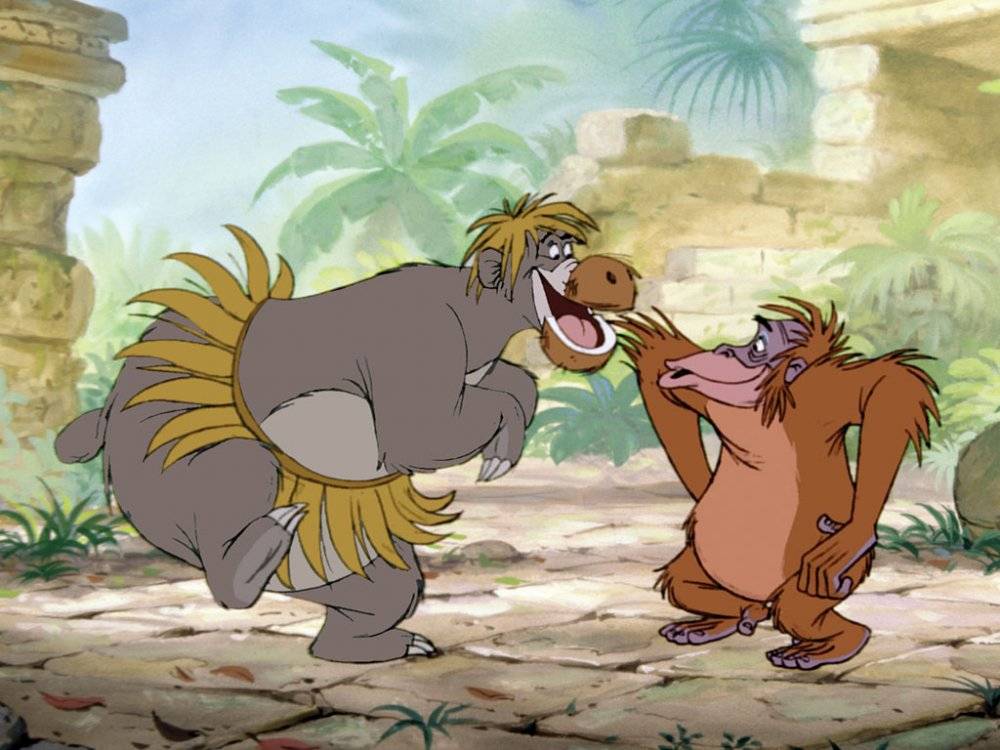
This will probably come as a surprise to many of you that I’ve ranked The Jungle Book so high. It will be equally surprising to learn that as of today, it is still on my list of the 100 Greatest Films of All Time. What can I say? I believe The Jungle Book is one of the stealthiest brilliant films of all time. And I’m not alone: Gregory Peck thought so too, to the point that he resigned from the Academy in protest of its Best Picture snub. The brilliance of The Jungle Book is in its metaphors for growing up in the 60s. Ever the conservative filmmaker (in practice, if not wholeheartedly in politics), there is some clever satire on display as this young boy tries to navigate the jungle on a journey of self-discovery, a metaphor for growing up. He encounters, and subsequently interacts with: a military regimen that tries to recruit him (during the height of the Vietnam War), a beatnik who teaches him the healthiest, most pleasant way to enjoy life (Baloo, voiced by the great Phil Harris), the underground jazz scene (whose undertones are certainly troubling, but aided by the choice of Louis Prima for the role, keeping the vibe but losing the, well, racism), an insidious snake voiced by Winnie The Pooh whose metaphor is so obvious I don’t wish to say it out loud, and ultimately a group of mop-haired Liverpool-voiced vultures. This metaphor is aided by a simplistic, yet utterly luscious animated landscape and a series of musical sequences that stand tall as Disney’s finest, funniest work, from “The Bare Necessities” to “I Wan’na Be Like You.” And did I mention the villainous Shere Khan voiced by the golden-tongued George Sanders? Maybe I’m reading too far into this children’s film. But even if I were, it doesn’t take away from the genius and impact that The Jungle Book possesses, even all these years later.
2. Fantasia
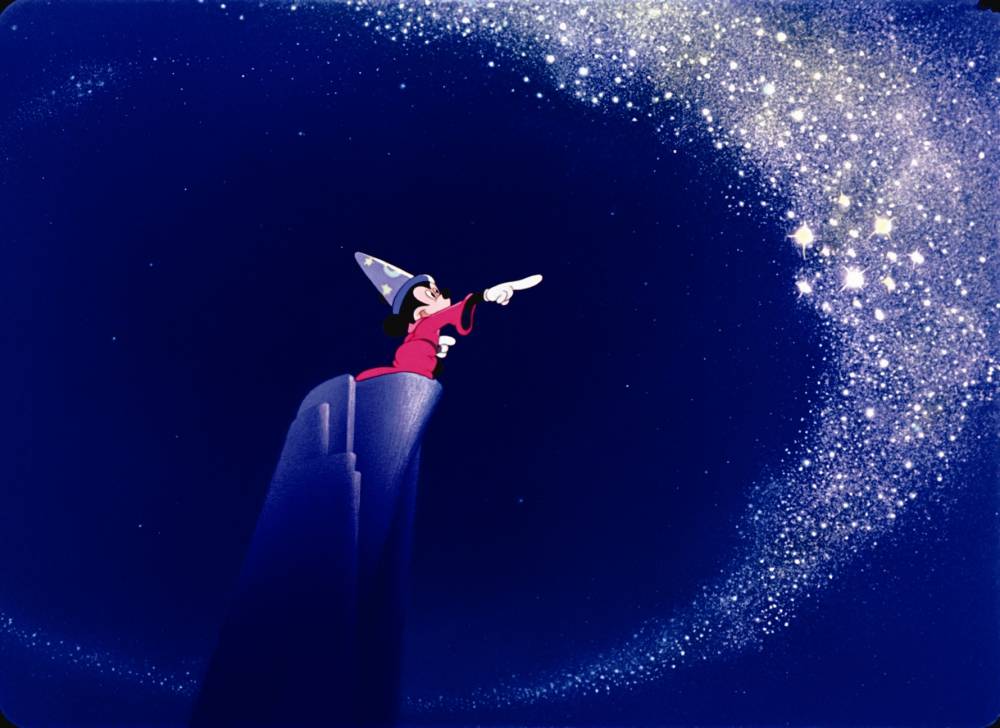
This may perhaps come as a shock to you all, as I’ve placed such an importance on “plot” thus far in this Disney Top Ten list, and Fantasia is the least plot-driven Disney film…ever? But that’s precisely why Fantasia is so brilliant: it is a grand experiment, seeing how many different stories and themes the animators could tackle by crafting original stories out of pieces of classical music. Narrated and “composed” by Deems Taylor in conjunction with legendary conductor Leopold Stokowski, Fantasia is an attempt to demonstrate for the world that animation is, in fact, an art, and not just a gimmick. Each piece is a little masterpiece in and of itself. Sure, Mickey Mouse and “The Sorcerer’s Apprentice” are the draw (and the broom-based sequence is, in fact, rather inspiring), but it’s the other sequences that dazzle. Pieces by Bach and Stokowski are used to demonstrate how the music and animation will synch up. Stravinsky is used to narrate the creation of the universe, involving a dinosaur ballet unlike anything animation had done before (or done since). Flowers and fairies dance to “The Nutcracker.” Naked centaurs get drunk to Beethoven. And in the film’s greatest sequence, “Night On Bald Mountain,” Chernabog awakens from Hell and summons evil spirits to take to the night sky. Each sequence is brave and daring and expertly crafted, changing the way animation was done forever, and yet never feeling dated or ancient in its efforts. Fantasia arrived just before the start of World War II. Even if it hadn’t, it likely still would have been one of the biggest bombs in history (before future releases elevated it to one of the highest-grossing). But thus is the journey of true artists; their best work is rarely appreciated in their time. And that’s exactly what Fantasia is: Disney’s greatest Golden Age achievement, outshone only by one…
1. Sleeping Beauty
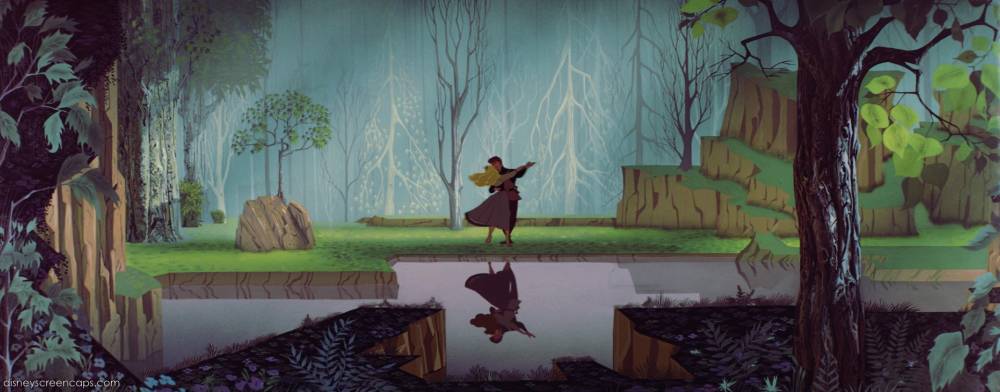
This was never a question for me. No matter how you slice it – as an execution of the Disney formula, as an animated work of art, as a fairy tale, or beyond – Sleeping Beauty is Disney’s masterpiece. Despite costing so much money it nearly bankrupted the company (something Walt did time and time again, it seems), Sleeping Beauty is masterful across the board. It improves on the story told in Snow White – a young princess who falls in love, is cursed with eternal sleep by an evil witch, and awoken with a kiss – by actually portraying the love between these two. Aurora and Prince Phillip’s meet-cute in the forest is beautifully rendered, utilizing Renaissance-era portraits in wide panoramic images that were unheard of at that time. Disney made the expensive decision to release the film via Super Technirama 70mm exhibition – a specialized film stock that involved massive screens that had to be curved in order to show the entire image. It is, to date, the only animated film to utilize this technique, which was primarily used for epics like Spartacus and King of Kings. And for that reason, there has never been an animation style like it. Meanwhile, Aurora and Phillip’s love story is unforced and wholeheartedly earnest, so when the kiss inevitably comes, you feel its passion and romance (it’s also wholly fleshed out, avoiding the stupid efforts to undermine #MeToo by hacks like Bill Maher). The protagonist fairies (this is really their story, as they strive to protect their goddaughter from a terrifying fate) are expertly portrayed, humorous and warm and intelligent in ways many Disney characters often aren’t. And it all ties together with Maleficent (Eleanor Audrey), Disney’s greatest villain, perfectly scowling and terrifying in every frame she’s in, whether she’s a brooding villain on a mountaintop or a ferocious dragon engaged in a fantastical duel with our poor hero Phillip. Add to that humorous animals (Phillip’s horse puts Tangled to shame), an adaptation of a classic operatic score (I’m a sucker for Tchaikovsky), and the best animation Disney has ever done, and you have an across-the-board hit that deserves all the acclaim it can.
Well, that wraps up the Disney Top Ten! Next week, I will conclude animation month with a look at the greatest animated film of all time – there will likely be some Disney reprises there, but not as many as you’d think! In the meantime, feel free to comment below with your thoughts on the list. Are there any Disney films that you dearly love and believe I missed? Any you think should be higher, or lower? Feel free to let me know in the comments. And now, because I’ve spent the last two weeks (or more) going gaga over a multi-billion dollar corporation, I think it’s only fair to take the piss out of them a bit. So why don’t we conclude with a quick trip inside the Disney Vault, courtesy of Robert Smigel?


Add Comment