
The following is part one of a three-part series of reviews featuring documentaries pertaining to the 2020 Election and the current state of politics
Today, one of the most fraught elections in recent memory will come to a head, as millions of Americans gather to cast their vote for the next President (almost 100 million have already cast ballots through absentee ballots and early voting polling places). As we watch two less-than-ideal candidates go head to head after four years of tense division, bloodshed, and a global pandemic that has ravaged our country, it’s easy to think to ourselves a series of questions: How did we get here? What is going on? And is there any hope for our broken government to fully recover? Well, three documentaries this year, whether knowingly or otherwise, tackled these questions in rather unique, massively important ways. Boys State explored how the system became broken to begin with. Totally Under Control pulls back the curtain to explore exactly how f*cked up our system is. And in the strangest of all, The Swamp explores a strangely uplifting bipartisan effort inside Washington seeking to fix some of these damages. And as the election weighs upon us, I took a look at these films to see what they had to say, how they said it, and whether they were worthwhile.
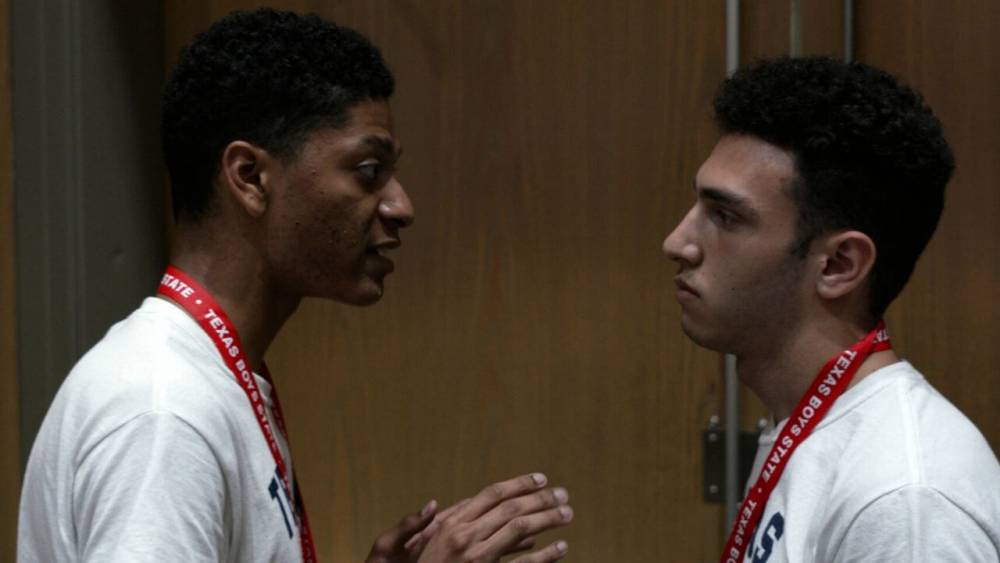
The first film on the docket is Boys State, which explores the cracks in American democracy. Boys State is a program run by the American Legion, in which 1200 students are selected to serve at their state’s capital, in order to hold their own elections, Kid Nation style. They create laws, form political parties, select chairmen, and eventually run against each other to elect a Kid Governor. Former graduates include Bill Clinton, Dick Cheney, Cory Booker, Mike Huckabee, Samuel Alito, and Rush Limbaugh. Boys State follows the proceedings of Texas’ 2018 Boys State, specifically following four members that would shape the upcoming governor race. There’s Steven Garza, the son of an undocumented immigrant who wishes to become governor despite being openly liberal in a fairly conservative body. There’s Chicago native René Otero, who wants to use his whip-smart brain and natural charisma to bring his party to glory. There’s Robert MacDougall, a popular pretty boy who hopes to ride his popularity to victory. And then there’s Ben Feinstein, a politically active double-amputee who quickly realizes that in order to game the system, you have to play dirty. What follows is a fascinating microcosm of the greatest strengths and deepest weaknesses in the current political system.
One of the key themes of Boys State is the boys’ – and the audience’s – realization that policy matters. As the press and political opponents move ever-closer towards distortion of platforms and dirty politicking, there has been an ever-growing trend of politicians hedging their bets and pandering for votes. Part of the reason politics is so partisan at the moment is because the people running for office either lie about their positions or speak in pleasant buzzwords to avoid offending anyone. It’s an ironic trend considering two of the biggest upsets of the past fifty years of governance involved two young up-and-comers who spoke plainly and honestly about their views and their desire to help the American people. It’s also the reason Bernie Sanders caught on whereas, say, Pete Buttigieg never did. Boys State mirrors this growing disconnect for the American people inside the goings-on of the Nationalist Party (one of the two fictional parties inside of Boys State), and the power dynamic between René, Steven, and Robert. It is clear from the jump that Steven stands out from the pack – his first scene is getting dirty glances for rolling up to the bus in a Beto shirt, before winning over friends with stereotypical 16-year-old speak.
The film goes out of its way to make it clear that Steven is different, and this helps the audience follow through to what should be a natural conclusion: that deep down, people want politicians who actually care, and believe the things they say. It contrasts him to pretty boy Robert, who acts like he was a finalist for the Chris Klein role in Election (my favorite scene may actually be when he’s fired up and trying to rally votes by screaming “Gotta get out hard! Let’s do push-ups!”) and running on an exclusively pro-life and pro-gun platform despite sharing neither of these beliefs. As he puts it, “That’s politics.” Even René lacks Steven’s openness – while he’s gifted at organizing crowds and delivering barnburner speeches, he follows up his first speech by explaining that his strategy is to “only use buzzwords and never have a platform. Contrast this with Steven, who from the jump speaks with his fellow constituents about what matters to them and finds ways to make it work without compromising his values. He knows it won’t make him popular to discuss his work organizing March For Our Lives. But he speaks from the heart, about issues that really matter, and by finding the common ground with kids who think different than him, and standing up for what he believes in as opposed to pandering for the vote, it makes him a hopeful leader for the future – the type of leader we all want, as opposed to a career panderer and a septugenarian edgelord.
Of course, optimism is not the driving force here. As uplifting as Steven’s story may be, there’s a reason the opening quotation is the famous George Washington quote “Political parties will allow strong-willed men to usurp all others.” After all, this is a group that hilariously voted the previous year to secede from the State of Texas. It only makes sense that someone like Ben would come along to manipulate them. Ben is one of the most fascinating documentary characters I’ve seen in a decade. A double-amputee with aspirations for governor, it is clear from the moment we meet him that he will function far better as a “power behind the throne” type. He studies political speeches for key strategies and declares rather interesting viewpoints, like “I don’t have legs, which puts me at a greater disadvantage than a Black person! You don’t hear me complaining!” While the entire proceedings do carry some weight for our future generations, it is hard to look at Ben and not think he’s taking things too seriously. While the other kids are outside having fun, Ben remains inside schmoozing teachers and making backroom deals for power. When the vote arrives for his party’s gubernatorial candidate, Ben takes to whipping up support for Eddy, a candidate with no clear views whom Ben finds easily manipulable.
Ben is simultaneously frightening and a genius – a 17-year-old Lee Atwater. He is both fascinating and infuriating, considering his ability and willingness to lie and sabotage to further his party’s message. When Eddy goes up against Steven in the general election, Ben is on top of things from the jump. Unlike Steven’s strategy of “talk from the heart,” Ben has realized the second greatest tool in politics: “Unity doesn’t win. Fear does.” And I’ve gotta say, while it makes me worried about the future, it is kind of entertaining to watch the Federalist Party in action. From the jump, they feed upon the optimistic naivete of the Nationalist Party. In an incredibly ironic twist, René, despite his “no platform” strategy and careful studying of the Obama playbook, almost gets impeached due to his taking of one singular stance: “No secession.” This leads to a horrific, yet kinda hilarious subplot where Ben tries to use memes to rile up the “Impeach René” crowd and sabotage his rivals, only to become confused when the memes inevitably become racist against the black Otero. Apparently despite studying Lee Atwater’s playbook, Feinstein never saw where the dirty tricks inevitably led to. And in one of the film’s final twists, Ben pulls off a last-second Hail Mary that’s one of the most audacious political maneuvers I think I’ve seen on even a national level. Steven may be the heart of this film, but Ben is its core.
However, despite the potential sociopathy of some (many) of the kids in attendance at this camp, I don’t fault them at all. There is certainly an argument to be made that by teaching children improperly and maliciously, it affects their views later in life. After all, we expect these kids to be wild douchebags that try to pass laws like “All Prius Owners Must Be Relocated To Oklahoma” or “The Letter W Should Be Replaced With Dubya.” They’re kids! What we don’t want are American Legion cosplayers awarding pandering answers (one student is selected because he uniquely declares his role model as “Christ himself”) and misteaching Brave New World, or parents who nod in approval over every dipsh*t response their child utters. It is entirely telling that the supervisors at Boys State are only seen scolding the boys once. It’s not when racist memes are made about one of the members. It’s not when the boys begin calling for widespread executions. It’s when one boy asks why they don’t simulate what happens after the elections. The adults don’t care about the aftermath – the important thing is the outcome of the election, and the game of it all. And by teaching this lesson to children – that the only important thing in politics is to win, and that policy and helping our fellow man don’t matter – we end up losing sight of why government matters and creating lifelong politicians who are reelected solely on name recognition and funding by secretive interest groups and elite billionaires. They are the true villains here, and by continuously teaching these lessons year-in, year-out to a new crop of students, it creates a cycle that explains the downfall of American society over the last 50 years.
As for the filmmaking, I do want to commend Jesse Moss and Amanda McBaine for what they accomplished here. Not only is the film an incisive exposê, it’s also a crackerjack piece of filmmaking. Moss and McBaine film the production as if it were a political thriller, capturing every backroom deal and moment of moral clarity through sheer luck and editing talent. The film releases its information with careful restraint to make distinct points – we don’t meet the Federalist candidate Eddy until late in the production, so that we understand in advance that Ben’s BS caucusing jargon is just that, and falls flat with the viewer despite the camp’s enthusiasm. There’s a clever little background plot that’s only hinted at, in which the two attendees chosen as press corps members (one from each party) slowly devolve into Fox News and MSNBC. There’s a dramatic talent show performance where a member plays “Hallelujah” (a talent show requirement) that reminds the audience that, despite how riled up we may feel by these kids, they are just children at the end of the day, and not the true target of our scorn. And when we finally reach the general election at the film’s climax, it is truly riveting in ways that might surprise you. In fact, there’s probably only one decision that struck me as odd about the entire project: the fact that the talking head interviews were often performed with the key cast members answering questions whilst George Costanza-ing a couch. I don’t know why they chose to sit in this fashion. I don’t know why the directors let them do so. All I know is it was all I could think about during some rather important scenes, and that’s a bit of a weird letdown.
Boys State is the perfect distillation of modern American politics, in ways both good and bad. It is hard to not look at the lessons the adults instill upon these children and realize “Hey, that’s where things went wrong.” And it can at times be as infuriating as the current national scale. But it also provides some hope for the future. Most of these kids seem like they will eventually grow out of their worst habits, and some learned in real time the importance of standing up for one’s beliefs. Hell, even recent interviews with Ben have shown he’s become disillusioned and disgusted with some of the choices he made at the time – an exciting, refreshing update considering how many politicians across the board seem to have never outgrown their teenage douchebaggery. I look at Boys State as two warring visions of our future coming to a head. There’s the hope for a generation that can be better than we are now. And there’s the fear that the distillation of toxic, broken systems and ideas will become the only thing they learn, leaving us worse off than we already are. All I know is that Boys State, as a documentary, raises some fascinating ideas in fun, exciting ways. And there’s truly no better way to learn. Take care, be safe, and please remember to vote!
A
Boys State is now streaming on Apple TV+
The second and third part of this series will be posted later today, and can be read here and here


Add Comment