
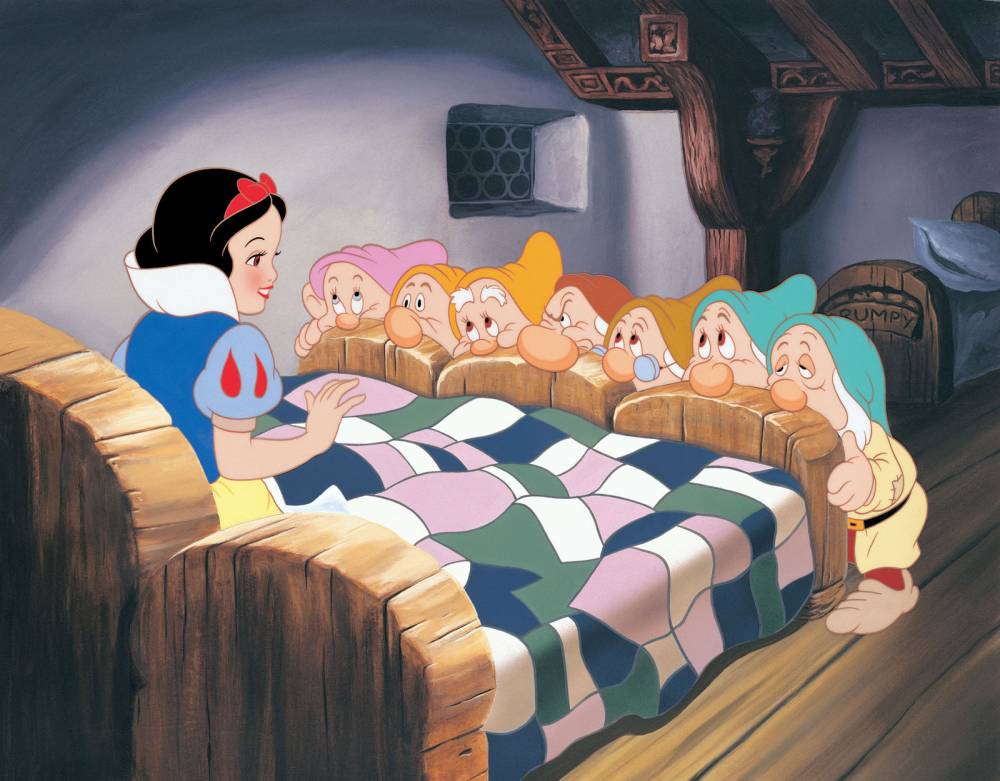
Well, everyone, it’s been a heck of a journey. Over the course of the last month, we’ve covered the cornerstones of American Animation: Pixar and Disney. But animation is a much wider field than that. There’s the more pop-culture heavy works of Dreamworks, the dreamlike fairy tales of Laika, and the brilliant satire of some of our finest directors. And that’s not to mention the works of the whimsical French, or the brutal austerity of the Germans, or the next-level brilliance of the Japanese. And so, to conclude Animation Month, I thought I’d provide one of my long-overdue Greatest Of All Time lists, finally debuting theTop Ten Greatest Animated Films Ever.
What constitutes the Greatest Animated Films of All Time? Well, I think this title requires quite a few criteria. First, obviously, it must be predominantly animated. A frame or two of real-life human beings may be allowed, but something like Mary Poppins and Who Framed Roger Rabbit? would not qualify. That being said, any form of animation can be and should be considered. CGI, computer-animated, hand-drawn, shadow puppets, stop motion, and beyond all have an opportunity to make the cut. Second, the film must find new ways to forward the art of storytelling. I’m looking for something beyond the pale here – either the animation accomplished new levels of craft (The Nightmare Before Christmas), the story was told in unexpected new ways (Princess Mononoke), or it revolutionized the art and craft (Snow White and the Seven Dwarfs). And third, I’m looking for a level of cultural, emotional impact that defines a legend – the way Akira and The Lion King seeped into pop culture impacted the way things looked and sounded for years to come.
Now, obviously, because animation is such a massive field, there are many contenders to choose from. And some I’ve already written about at length – here, here, and here. In the case of those films, I’ve chosen to reutilize and retool their blurbs here, rather than rehash what I’ve already declared. But what about the films that didn’t make the cut? Well, let’s take a look at some of my Honorable Mentions, starting with the ones most likely to get me murdered: Disney. Disney had a litany of contenders that just missed out, including Cinderella, Frozen, and The Little Mermaid. And at one point, this list even included The Lion King, Snow White, and Pinocchio. All three of those films were later bumped, to make way for more interesting, exciting content. Similarly, Pixar had a few major contenders miss out, including Up, Toy Story 3, and Inside Out. The things I liked in those films were oftentimes done in earlier films – and occasionally, even better.
Taking a trip across two oceans, I had to make some tough choices with Japanese animation. Both Akira and Perfect Blue were considered for this list, but just missed out. Ditto Studio Ghibli, which saw close consideration for Princess Mononoke, Nausicaä of the Valley of the Wind, and Spirited Away – a film that was, at one point, a proud-serving member of this list. Meanwhile, the Mods in Great Britain gave us some rather dazzling spectacles, including the bizarre Yellow Submarine and the haunting Watership Down. And I can’t forget the avant-garde works of directors from around the world that challenged the Disney model and tinkered with weighty themes inside a whimsical format. This includes Tim Burton’s stop-motion fairy tale The Nightmare Before Christmas, Brad Bird’s Cold War fable The iron Giant, Richard Linklater’s philosophically challenging Waking Life, Wes Anderson’s whimsy-filled Fantastic Mr. Fox, the cataclysmically heartbreaking It’s Such A Beautiful Day, Charlie Kaufman’s bizzarro romantic drama Anomalisa, Laika’s crowning achievement Kubo and the Two Strings, and the haunting, uplifting animated documentary Tower. All of these films are incredible, and you should give them a chance if you previously haven’t.
And finally, a few caveats I need to make clear. As always, I am but a simple man. I have not, in my 27 years on Earth, seen everything. There are so many films – especially from other countries – that I have yet to see. Before press time, I was unable to see Zack Snyder’s The Legend of the Guardians: The Owls of Ga’Hoole, or the highest-grossing Japanese anime Your Name, or the French masterpieces Persepolis and The Triplets of Belleville. I did start the Israeli animated documentary Waltz With Bashir, and while it could make a great case for earning a spot on this list, I have not seen enough to change my current lineup. If I end up changing my mind, I will be sure to republish this article with an update, announcing its spot on this list. Oh, and I do feel that I must include a Special Award right here at the top. That award goes to Wallace and Grommit. Over the course of three short films, Wallace and Grommit pushed the world of animation and storytelling forward, whether they were going to space, fighting evil penguins, or beyond. However, these were short films: I am only considering feature-length features. And they’re one feature-length outing, Wallace and Grommit: The Curse of the Were-Rabbit, just isn’t up to snuff. However, the cheese-loving duo is too funny and too brilliant not to mention at all; therefore, I am giving them a Special Award in recognition of their services. Now that we’ve addressed all that, let’s jump right into the Greatest Animated Films of All Time.
10. Spider-Man: Into The Spider-Verse
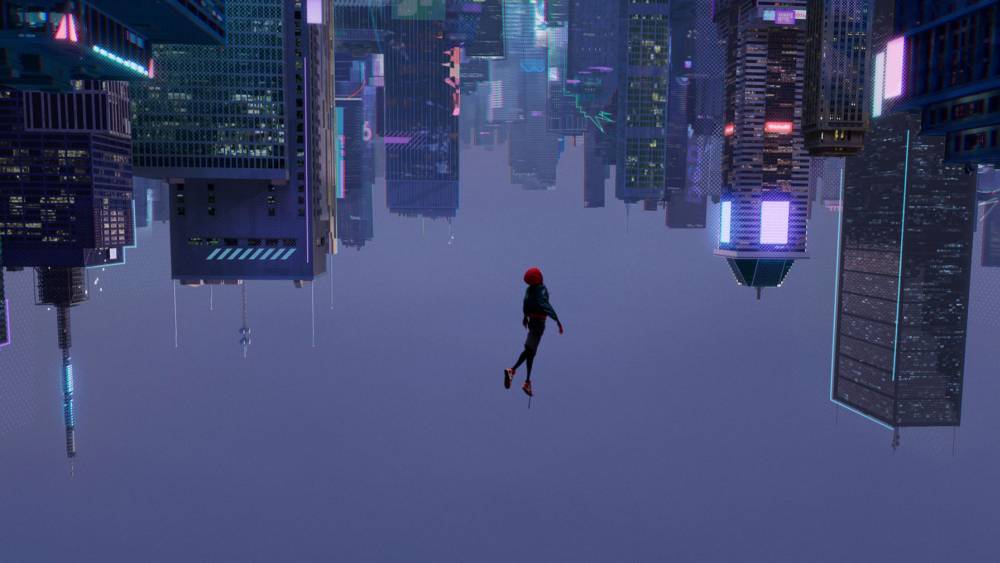
Part of the reason I wanted to do this big write-up on the best of animation is that, inexplicably, I never had a chance to write about Spider-Man: Into The Spider-Verse – which is a real shame, because walking out of that film, I realized I had witnessed something incredibly special. On a story level, everything is executed to perfection. Both a parody of the Marvel Cinematic Universe and a stand-alone adventure, the film can function in whatever genre it needs to: as an action movie, a coming-of-age drama, or even as a parody/comedy. In terms of those jokes, Spider-Verse functions like a lot of contenders for this list, relying on pop culture jokes to the nth degree. But what so many of those films fail to understand is that audiences don’t need to understand a reference for a joke to work, so long as it’s well-executed – it can function as a laugh line or an Easter Egg, as opposed to both. However, above all else, what makes Spider-Verse’s story sing is that these jokes aren’t just jokes: they tie into a larger overall theme. As comedic as it is to see all the different versions of Spider-Man Miles Morales (a fantastic Shameik Moore) must team up with – Fat Depressed Jake Johnson Spider-Man, Nicolas Cage Film Noir Spider-Man, John Mulaney Spider-Pig – they all tie into the film’s beautifully rendered central message: anyone can be a superhero, so long as they strive to do what’s right. And when coupled with truly innovative animation, from incorporating comic book tropes into the filmmaking (panels/thought balloons/transitions) to the different styles for each character (Miles’ real world is different from Penny’s anime rendering which is different from Spider-Pig’s Looney Tunes aesthetic) to the sheer gorgeousness of the scope and action, Spider-Verse emerges as one of the greatest artistic achievements of the 2010s, and one of the greatest animated films of all time.
9. Shrek

Somebody once told me that Shrek had devolved into an internet meme, subject to mockery and even derision by a misunderstanding Gen-Z and a group of hoity-toity film snobs (I’d like to stick an arrow up Scott Tobias’ ass, let me tell you). The audience that so casually dismisses Shrek, twenty years later, do so at the risk of overlooking one of the most entertaining animated achievements of all time. I don’t mean because it saved Jeffrey Katzenberg’s struggling animation studio Dreamworks. And I don’t mean because it was the ship that launched a thousand parodies, each trying to appease to the Nickelodeon audience at home that loved pop culture references and risqué humor inside of their dazzling Saturday morning cartoons. No, Shrek deserves its spot because there was nothing before like it, and nothing like it since. It is the perfect deconstruction of the Disney myth, an ethos present from the jump: in the opening scene, utilizing Disney’s trademark storybook opening, Shrek (voiced perfectly by Mike Myers) rips apart a fairy tale to use as toilet paper. It’s a scatological joke that works for the kiddies, but also makes the film’s central premise known: that true love is not solely deserved by unachievably beautiful princes and princesses designed to carry on the monarchy. It is deserved by all, especially those who strive to do good and better themselves. The film is aided in this mission on two fronts. The first is the CGI animation, distinct in its green and brown hues that looks decidedly different from the Disney formula, and which still, for the most part, holds up today. The second is the voice cast, who work together to give the film a whimsical, classical feel (Myers’ Scottish accent is reminiscent of the voices parents everywhere utilized when reading their children bedtime stories) and irreverence (the film functions like that dirty joke your dad tells you in secret that you don’t fully understand, but know that you love). Cameron Diaz utilizes her trademark balance of sardonic wit and lovable purity that made her a star in the mid-90s. John Lithgow is appropriately pompous as Lord Farquaad. And of course there’s Eddie Murphy, whose motormouth Donkey is far and away the greatest bit of voice acting of all time. Listen, are there dated pop culture references, like Smash Mouth and The Matrix and The Dating Game? Sure. But that script is still unlike anything we’ve heard before, or will hear again. And when coupled with the film’s influence, innovation, and achievements, this is undeniably one of the greatest animated films of all time.
8. The Adventures of Prince Achmed

No original cut of The Adventures of Prince Achmed, Lotte Reiniger’s 1926 silhouette masterpiece, exists in full. This is a tragedy, because not only is it the most innovative animated feature of all time – and the first, regardless of what Disney tries to mythologize into existence – it is also the best version of Aladdin ever put on film (yes, you heard me). Reiniger spends the entire film (a retelling of several portions of Arabian Nights) experimenting with the art of puppetry, constantly finding new ways to push the medium forward. And the results of these experiments are incredible even to this day; many of her creations would still be considered unheralded and shocking. Reiniger manages to create illusion after illusion with her artwork, from puppets morphing from animal form to human in the blink of an eye, to the construction of a magic castle seemingly out of thin air, to magical flying horses. One of my favorite, subtle touches involved the Caliph asking a sorcerer if Prince Achmed had any idea what he was doing, and the sorcerer puppet just shrugs. Meanwhile, for as much credit as we give Charlie Chaplin, and The Jazz Singer, and Snow White for their “innovative” accomplishments, so much of their “groundbreaking” work can be traced back to Reiniger. Reiniger color-tinted her work long before color film reached the masses, coating each frame with blues and yellows and whites that helped emphasize the shadows. Characters play instruments in time with the score long before sound was considered a norm. And in one hilariously awesome frame, the silent film text bursts out of the screen, Friday the 13th style. And that’s not to mention all the blatant thefts present in Disney’s work over the years. Reiniger’s illusion of depth and facial detail can be seen everywhere in the Disney lexicon, from Snow White to Aladdin. Hell, you can’t even watch a magic battle between two sorcerers transforming into different animals without thinking of the Madame Mim sequence in The Sword in the Stone. Visually, narratively, and beyond, The Adventures of Prince Achmed is a dazzling feat of animation, and if we’re going to praise a film for creating modern-day animation, I feel it is only fair that it be this one.
7. Toy Story

Now that I’ve spent the last three slots bashing on Disney, it’s time for my hypocritical turn into a Disney-dominated list, starting with the first Pixar entry I’ve chosen. It was always a matter of “when,” not “if” in terms of the innovative studio’s groundbreaking debut. While the animation looks mildly dated by today’s standards (Andy and Sid look absolutely terrifying), it is still a masterful accomplishment by any measure of the imagination. The size and scope on display here, where ordinary rooms feel massive from the toys’ perspectives, is masterful – an opening shot of the toy soldiers marching out through an open door is otherworldly. But what makes the film interesting is the central concept. As I’ve written about multiple times to date, Toy Story is about angst in your career, and your purpose in life. In this first entry in the iconic saga, that angst is that you’ll eventually be replaced by someone younger and “cooler” in your respective field – thus the 60s-era conflict of a “cowboy,” the coolest thing of the 50s, being replaced by a spaceman, the coolest thing of the 60s. This central conflict also gives us Woody, voiced perfectly by Tom Hanks, one of the most interesting characters of all time. He’s the protagonist, and yet he’s a massive jerk (famously, he was based on Steve Jobs for this movie, the producer who never saw the parallels). He tries to murder his rival, constantly belittles his friends, and makes it hard to root for. It makes his eventual redemption all the more rewarding. Meanwhile, Tim Allen brings a macho daffiness to the role that I’m not sure another comedian could have accomplished. He makes Buzz Lightyear seem cool, then pathetic, and then, just when you need it most, triumphant. The film’s arc is perfectly crafted – from Woody and Buzz’s altercation-turned-reluctant friendship-turned-fully-fledged friendship to each of their individual journeys. The rescue of Sid’s mutant toys is touching, the revenge on the abusive Sid is delightful, and in the stunning climax, when Buzz regains his confidence and flies for the first time – few moments in all of cinema are as exhilaratingly, perfectly executed as this one. Heck, the film works so well, even the goofy songs by Randy Newman feel perfect. Toy Story was a hell of an accomplishment, and it’s the reason Pixar is where they are today.
6. The Jungle Book
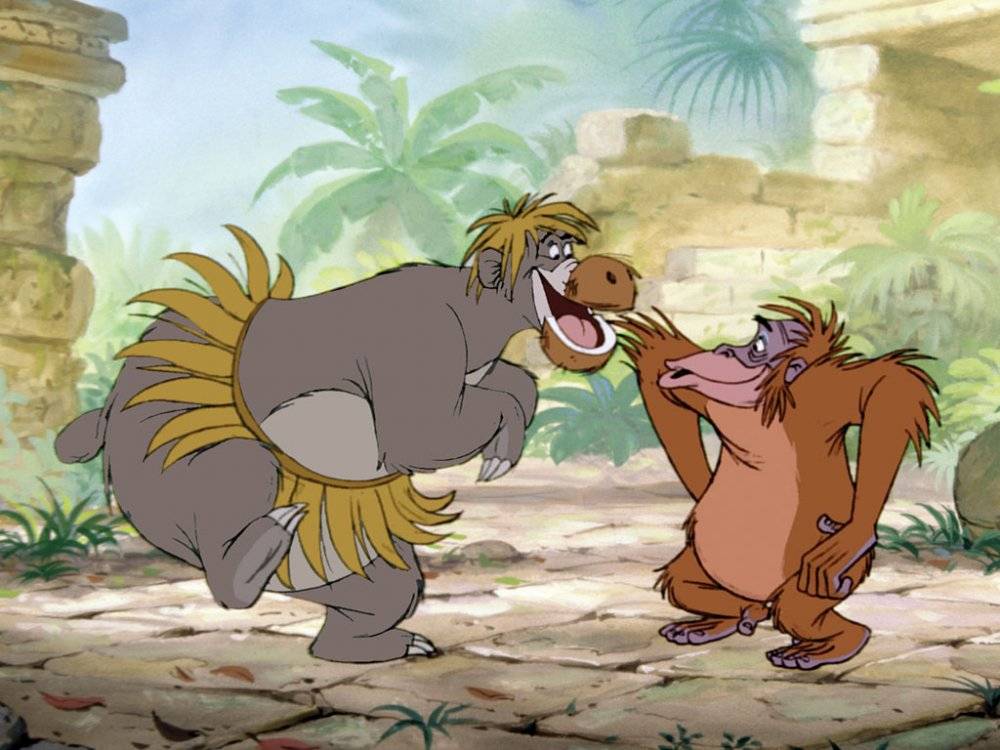
This will probably come as a surprise to many of you that I’ve ranked The Jungle Book so high. It will be equally surprising to learn that as of today, it is still on my list of the 100 Greatest Films of All Time. What can I say? I believe The Jungle Book is one of the stealthiest brilliant films of all time. And I’m not alone: Gregory Peck thought so too, to the point that he resigned from the Academy in protest of its Best Picture snub. The brilliance of The Jungle Book is in its metaphors for growing up in the 60s. Ever the conservative filmmaker (in practice, if not wholeheartedly in politics), there is some clever satire on display as this young boy tries to navigate the jungle on a journey of self-discovery, a metaphor for growing up. He encounters, and subsequently interacts with: a military regimen that tries to recruit him (during the height of the Vietnam War), a beatnik who teaches him the healthiest, most pleasant way to enjoy life (Baloo, voiced by the great Phil Harris), the underground jazz scene (whose undertones are certainly troubling, but aided by the choice of Louis Prima for the role, keeping the vibe but losing the, well, racism), an insidious snake voiced by Winnie The Pooh whose metaphor is so obvious I don’t wish to say it out loud, and ultimately a group of mop-haired Liverpool-voiced vultures. This metaphor is aided by a simplistic, yet utterly luscious animated landscape and a series of musical sequences that stand tall as Disney’s finest, funniest work, from “The Bare Necessities” to “I Wan’na Be Like You.” And did I mention the villainous Shere Khan voiced by the golden-tongued George Sanders? Maybe I’m reading too far into this children’s film. But even if I were, it doesn’t take away from the genius and impact that The Jungle Book possesses, even all these years later.
5. Finding Nemo

Already hailed (by me) as Pixar’s greatest accomplishment (it’s the first time the animation stands out as “undated”), Finding Nemo is easily in the Top 5 Greatest Animated Films Ever. It is visually striking, with effects that have not aged. It is narratively and thematically rich, telling a grown-up story in a grown-up way that kids can still relate to. And it is cleverly funny, with each character perfectly cast and acted. Lots of people remember DeGeneres’ work as Dory, the comedic fish with memory loss issues and a stay-positive attitude. And there’s good reason for that – say what you will about the actress/comedian, Dory is an inspired creation. But let’s look at the central conflict involving Albert Brooks’ neurotic father and Alexander Gould’s wide-eyed son. This is a story that opens with a fish genocide, with Marlin watching his wife and kids being massacred by a barracuda. It gives his neuroses a whole new level, and makes his overprotection understandable. Meanwhile, watching Nemo come to understand, respect, and love his father is an emotional, beautiful journey that Pixar has yet to match. Each sequence on their odyssey possesses the perfect balance of whimsy, thrills, laughs, and adventures, whether it’s the deepest part of the ocean packed with weird-looking carnivores, a jellyfish field, a Vegetarian Shark Support Group (still one of the greatest creations in all of Pixar), and riding the mouth of a seagull to the rescue. And each character, whether it’s a scarred prison gang leader voiced by Willem Dafoe, a pelican voiced by Geoffrey Rush, or director Andrew Stanton as a stoner/surfer sea turtle named Crush (brilliant), is memorable in a way only Pixar can create – how many other films, animated or otherwise, can you name and define every character of the ensemble? No, Finding Nemo is one of the finest animated movies of all time, and easily Pixar’s best.
4. Beauty and the Beast
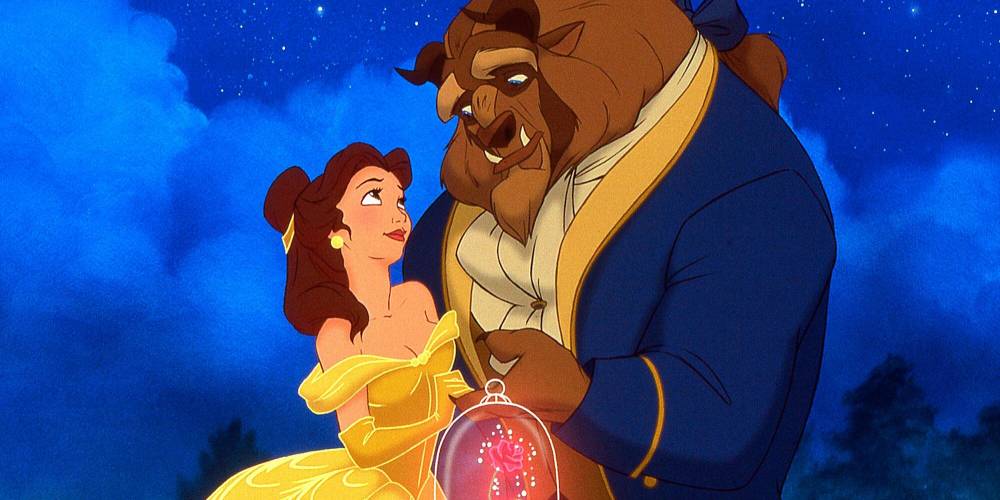
To date, only three animated films have ever been nominated for Best Picture. Two of them came when the field was expanded to ten. Only one film has ever done it on a list of five, and it’s because it is one of the greatest animated achievements of all time. I’m talking, of course, about Beauty and the Beast. On paper, this could be a challenging narrative to traverse: it involves the heroine being kidnapped by a monster, falling in love with her captor, and ultimately transforming him into a handsome prince through the power of love. And yet, Beauty and the Beast manages to avoid any of the story’s pratfalls by diving into the story’s deeper meanings, crafting a grandiose, epic backdrop with which to juxtapose the story, and giving it the attention of a fully-fledged musical epic. Belle is perhaps Disney’s greatest protagonist – fully realized in her thoughts and emotions, different from her closed-minded town and ok with it, and every bit as witty as her counterparts, be they a monstrous beast or an actual Beast (hyuck hyuck hyuck). The film stresses the importance of self-improvement, with both the Beast and Gaston starting in a place of aggressive toxic masculinity from which only The Beast emerges through compassion and curiosity. And it will never not be devastating to me that “The Mob Song,” a sequence where a group of small-minded villagers go to “kill the beast” for being different was written by a man dying of AIDS in the late 80s. But the power of this film goes beyond its romantic execution and themes. The animation, from the gowns and ballrooms to Busby Berkeley-inspired dance sequences, still feels fresh and alive today. The songs by Menken and Ashman are perhaps the most brilliant in any Disney film to date – from the romantic “Beauty and the Beast” to the bouncing brilliance of “Be Our Guest” and “Gaston.” This is a towering achievement of animation, Disney’s best story to date, and one of the finest animated films of all time.
3. Fantasia
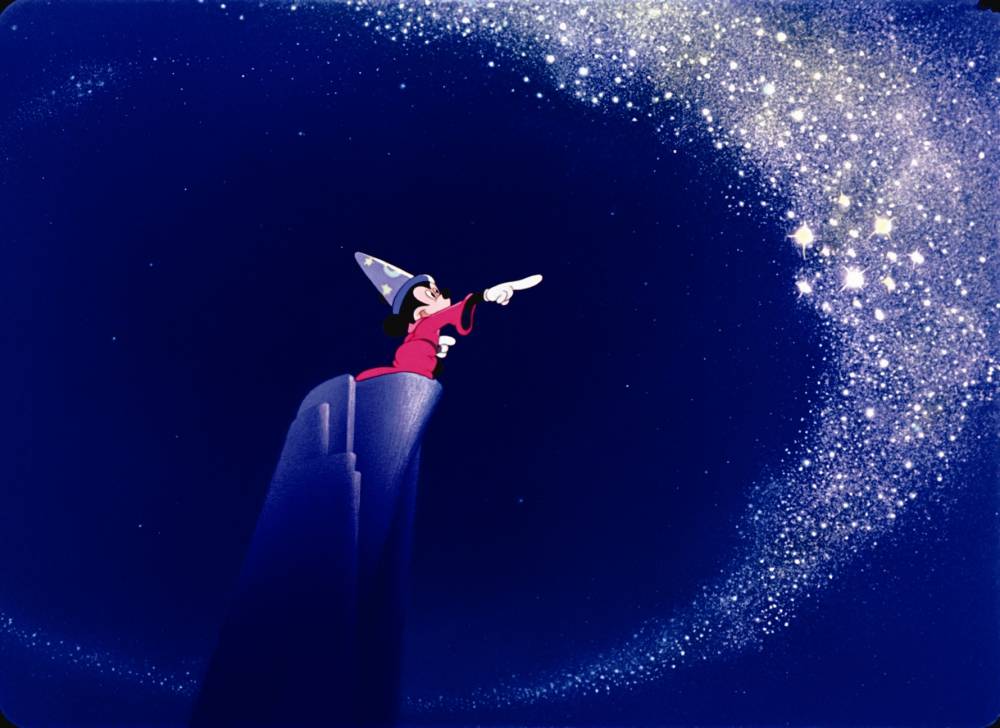
This may perhaps come as a shock to you all, as I’ve placed such an importance on “plot” thus far on this Top Ten list, and Fantasia is the least plot-driven Disney film…ever? But that’s precisely why Fantasia is so brilliant: it is a grand experiment, seeing how many different stories and themes the animators could tackle by crafting original stories out of pieces of classical music. Narrated and “composed” by Deems Taylor in conjunction with legendary conductor Leopold Stokowski, Fantasia is an attempt to demonstrate for the world that animation is, in fact, an art, and not just a gimmick. Each piece is a little masterpiece in and of itself. Sure, Mickey Mouse and “The Sorcerer’s Apprentice” are the draw (and the broom-based sequence is, in fact, rather inspiring), but it’s the other sequences that dazzle. Pieces by Bach and Stokowski are used to demonstrate how the music and animation will synch up. Stravinsky is used to narrate the creation of the universe, involving a dinosaur ballet unlike anything animation had done before (or done since). Flowers and fairies dance to “The Nutcracker.” Naked centaurs get drunk to Beethoven. And in the film’s greatest sequence, “Night On Bald Mountain,” Chernabog awakens from Hell and summons evil spirits to take to the night sky. Each sequence is brave and daring and expertly crafted, changing the way animation was done forever, and yet never feeling dated or ancient in its efforts. Fantasia arrived just before the start of World War II. Even if it hadn’t, it likely still would have been one of the biggest bombs in history (before future releases elevated it to one of the highest-grossing). But thus is the journey of true artists; their best work is rarely appreciated in their time. And that’s exactly what Fantasia is: Disney’s greatest Golden Age achievement.
2. Grave of the Fireflies
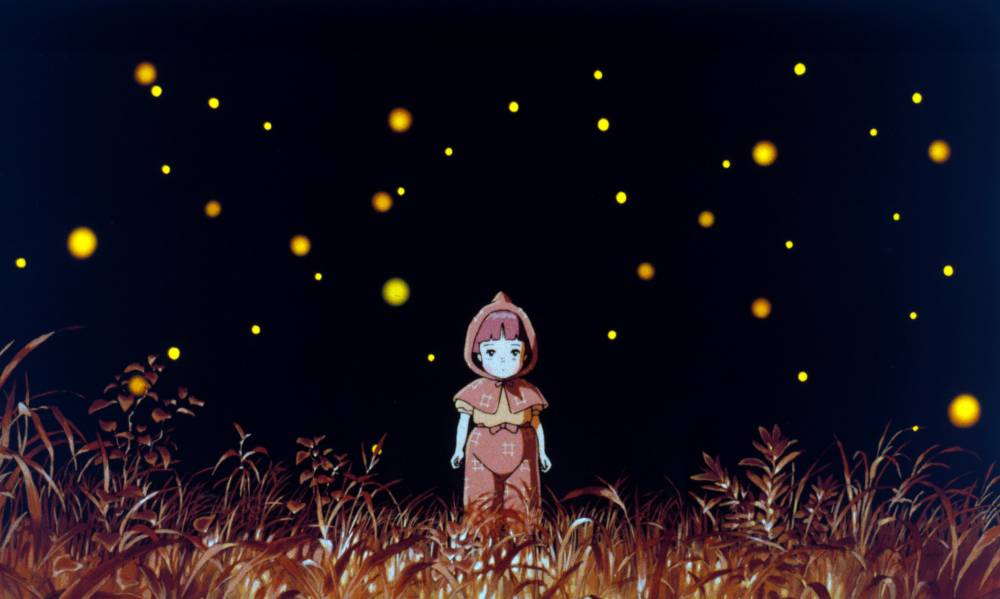
I tinkered with a lot of Ghibli films for this list. And I’ll be honest, picking one of the few Ghibli films not directed by the all-time great director Hayao Miyazaki does seem wrong. But if I have to pick one animated film from the Japanese answer to Disney – a studio that refuses to pander to its audience, and continues to challenge audiences with what animation can and should be – then I have to go with Grave of the Fireflies, one of the most beautifully tragic, perfectly animated films ever made. Fireflies is not the type of whimsy you’d expect from the studio that made My Neighbor Totoro, and I’d be shocked if Disney made anything in the modern era to come close to it. It is a heartbreaking film about war, told on the human scale. It is not a happy story: the film opens as the ghost of a young boy’s baby sister comes to beckon him to the afterlife, accompanied by magically flickering lights and mood-setting blues and blacks. It then flashes back to show their journey, as children living in Japan in the waning days of World War II. The film does not paint the Japanese army as good or evil, nor does it portray the Americans that constantly bomb the children’s village as good or evil. This is a film about the human cost of war; of the people we often ignore in statistics like “300,000 killed in a bombing raid.” We watch as protagonist Seita’s patriotism gives way to disillusionment, disillusionment gives way to hopelessness, and hopelessness gives way to bleak oblivion. The reason it is animated, beyond its childlike, fable-adjacent quality, is because director Isao Takahata inherently understands the impact animation can have. By crafting the characters to his own specifications, it draws us in all the deeper. Each character, horror, and landscape can be crafted to the eyes of a child – the fiery hell of war, the magic of the cave Seita and Setsuko inhabit, and the love they have for each other, even as disease and hunger eventually take their lives. Grave of the Fireflies took a genre usually disregarded as “childish” and evolved it, crafting one of the best animated, most viscerally anti-war, and quite frankly, best period, films ever made. There is very little like it.
1. Sleeping Beauty
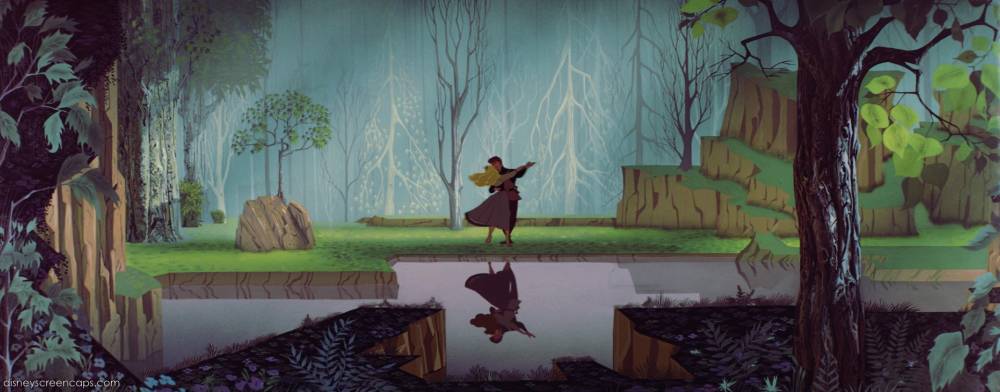
This was never a question for me. No matter how you slice it – as an execution of the Disney formula, as an animated work of art, as a fairy tale, or beyond – Sleeping Beauty is a stone-cold undisputed masterpiece. Despite costing so much money it nearly bankrupted the company (something Walt did time and time again, it seems), Sleeping Beauty is masterful across the board. It improves on the story told in Snow White – a young princess who falls in love, is cursed with eternal sleep by an evil witch, and awoken with a kiss – by actually portraying the love between these two. Aurora and Prince Phillip’s meet-cute in the forest is beautifully rendered, utilizing Renaissance-era portraits in wide panoramic images that were unheard of at that time. Disney made the expensive decision to release the film via Super Technirama 70mm exhibition – a specialized film stock that involved massive screens that had to be curved in order to show the entire image. It is, to date, the only animated film to utilize this technique, which was primarily used for epics like Spartacus and King of Kings. And for that reason, there has never been an animation style like it. Meanwhile, Aurora and Phillip’s love story is unforced and wholeheartedly earnest, so when the kiss inevitably comes, you feel its passion and romance (it’s also wholly fleshed out, avoiding the stupid efforts to undermine #MeToo by hacks like Bill Maher). The protagonist fairies (this is really their story, as they strive to protect their goddaughter from a terrifying fate) are expertly portrayed, humorous and warm and intelligent in ways many Disney characters often aren’t. And it all ties together with Maleficent (Eleanor Audrey), Disney’s greatest villain, perfectly scowling and terrifying in every frame she’s in, whether she’s a brooding villain on a mountaintop or a ferocious dragon engaged in a fantastical duel with our poor hero Phillip. No Disney villain has come close to matching her menace; she is every bit on par with the likes of The Wicked Witch of the West and Hannibal Lector. Add to that a litany of humorous, memorable animals (Phillip’s horse puts Tangled to shame), an adaptation of a classic operatic score (I’m a sucker for Tchaikovsky), and the best animation Disney has ever done, and you have an across-the-board hit that deserves all the acclaim it can. This is a groundbreaking animated film, the perfection of the “Disney Princess” formula, and a riveting tale of good and evil that impresses children and adults alike. It is, in my opinion, the greatest animated film of all time.
Well, that wraps up the Greatest Animated Films of All Time. And by extension, that brings Animation Month to an end. I’ve already updated the Sacred Wall GOATs subsection to include this list, which will continue to grow as more and more animated classics are released (or caught up with). In the meantime, if you’ve got any thoughts on the films appearing on this list – or if you’re mad that your favorite didn’t make the cut (my cousin already disowned me for not placing The Lion King higher last week) – then feel free to comment below. I’ll see you all next week, when we turn our attention from innovative animation to the thrills and chills of Sacred Walloween. See you all then, and prepare to get spooky!


Add Comment