

They say you should never judge something by its successes, but by its failures. And for that reason, 2019 was a pretty damn great year for cinema. I mean, my recently posted Worst Of 2019 list tells a story of mediocrities few and far between, while today’s Best Of takes us on a journey of good men changing the system, bad men earning their eternal comeuppance, cool superstars drinking and dancing, and magnificent antiheroes trying to survive a broken system. It was a year that made us laugh, made us cry, made us scream, and made us cheer, and it ultimately pushed the craft of filmmaking forward as a whole. It’s time for the Top Ten Films of 2019 – and because of a tie, you can make that Top Eleven!
Now, as we move in to this recap of a phenomenal year of cinema, I would like to remind you all about how I break down reviews and rankings. There are essentially two mindsets when it comes to creating a best-of list. The first mindset emphasizes the technical achievement – direction, writing, acting, cinematography, and beyond that successfully pushes the medium forward in new and exciting ways. The second mindset emphasizes audience reaction – the film’s ability to make you feel, and make you connect, and makes a ton of money because of it. Me, I like to find the happy median. I’ve seen many films that are technically stunning that I honestly couldn’t give two sh*ts about. Similarly, there are plenty of films that successfully connect to the audience (somehow) without a lick of originality or skillful direction (see: Joker). The best result for any great film is to find that happy median, where a director crafts something technically flawless and endlessly entertaining. After all, Citizen Kane and Casablanca are classics because they’re brilliantly made while highly entertaining. It’s also important that you remember that I am just one man. I cannot see everything. I still haven’t seen (or didn’t see in time) Portrait of a Lady on Fire, Pain and Glory, Transit, A Hidden Life, Atlantics, Long Day’s Journey Into Night, Clemency, Under the Silver Lake, The Nightingale, or The Beach Bum. I also didn’t finish Waves because, if I’m being completely honest…I didn’t really like it. It was a very much what happens when a super white guy tries to make Moonlight without any of the joyful whimsy. It is entirely possible that, in their entirety, one or more of these films could theoretically knock one of these films out of the running. It happened in 2014 with Into the Woods, The Guest, and The Grand Budapest Hotel, so it’s not impossible. I reserve that judgment going forward, even if I stand by this list wholeheartedly. These are the eleven best films out of the 85 I saw last year, and I will not revoke my endorsement.

Of course, no year would be complete without some Honorable Mentions. Some films were simply well-made, well-acted character studies that allowed me to revel in great actors reading great lines, like Just Mercy, Marriage Story, and the Biopic Threefer of The Two Popes, Judy, and the dazzling Rocketman. Other films were demonstrations of what one visionary director (or one very-rich studio) can come up with, like the technically brilliant one-shot of 1917, the layered horror in Us, the perfectly choreographed action in John Wick: Chapter 3 – Parabellum, the bombastically ridiculous action of Fast and Furious Presents: Hobbs and Shaw, the simplistic terror of Crawl, and the whimsical, heroic charm of Shazam! Animation continued to step up its game with journeys to faraway worlds, including the charming sequel The Lego Movie 2: The Second Part and two franchise-ending tearjerkers in Toy Story 4 and How To Train Your Dragon: The Hidden World. Meanwhile, comedy continued to surprise and elicit laughs, be it in the form of raunchy adult fare like Good Boys, intellectual gobbledygook in The Man Who Killed Don Quixote (funny Adam Driver is the best Adam Driver), or a variety of high-concept kids films, like The Kid Who Would Be King and the shockingly-decent Dora and the Lost City of Gold. Auteurs of days past and future took us on fantastical, intimate journeys, including James Gray’s Ad Astra (come for the Brad Pitt daddy issues, stay for the space pirates and killer monkeys), Joe Talbot’s The Last Black Man In San Francisco (a star is born in Jonathan Majors) and Joanna Hogg’s autobiography The Souvenir (slow, careful, and oh so mesmerizing). And I can’t forget to praise two of the warmest, loveliest, funniest films I saw all year, inexplicably both about wrestling: The Peanut Butter Falcon and Fighting With My Family. Oh, and as a friendly reminder, I (controversially) consider documentaries to be a separate art form altogether, as they have a different set of goals and purposes. But if I were to consider a documentary for this list, it would either be the mesmerizing, stunning recreation of the 1969 Moon Landing Apollo 11, or the shocking real-life murder mystery/conspiracy thriller Cold Case Hammarskjöld.
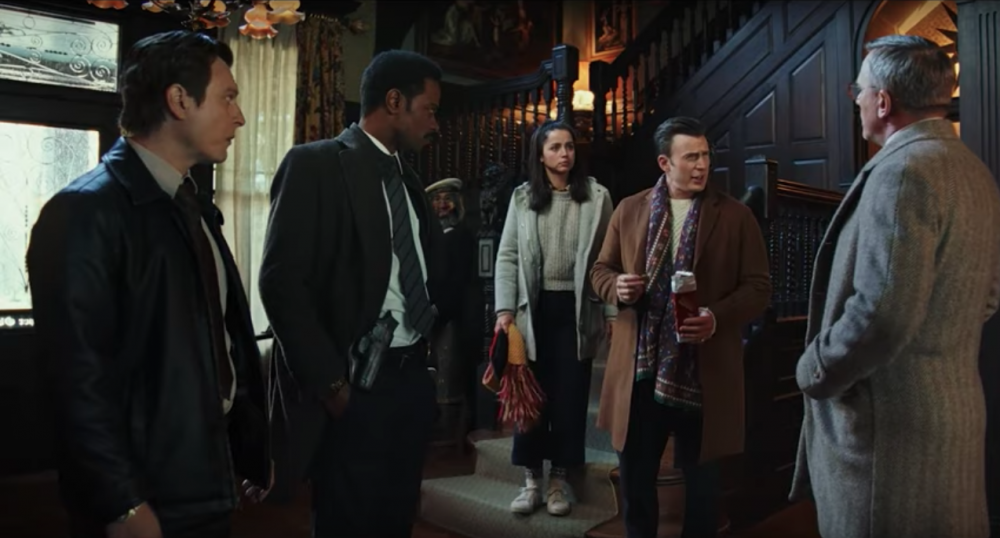
And before we officially reach the Top Eleven, allow me to take some time to recognize the Very Special Mentions, the runners-up to the official list that just missed out on recognition by a hair’s breadth, despite my deep love for their accomplishments. Dolemite Is My Name proved to be one of the best comedies of the year, as well as a welcome return to form for Eddie Murphy. Ford v Ferrariis the type of traditional Hollywood filmmaking we all so desperately miss, filled with big stars, fast cars, and classical storytelling at its finest. Uncut Gems is the type of genre, underground filmmaking that doesn’t get made anymore, with one of the year’s best ensembles and the sharpest editing in any film produced in 2019. Jojo Rabbit is an expert example of how to blend comedy and tragedy, oftentimes to brilliant effect. Hustlers provided a scathing critique of a broken system buried inside an ultracool aesthetic of badass, broken women (led by an unbelievably good Jennifer Lopez. Honey Boy is a spiritual, open wound of a film with some of the 2019’s best filmmaking and a shockingly strong performance from Shia LaBeouf. The criminally misunderstood The Dead Don’t Die is a weird, Airplane!-esque comedy that eschews a desire to Say Something to simply make people laugh. And of course, there’s Rian Johnson’s love letter to the murder mystery, Knives Out, which told a fun, original story in a new and exciting way (with an all-star cast, to boot). And now tht we’ve established the rest of the best, it’s time to get down to brass tacks. Here are the Top Eleven Films of 2019!
10. Avengers: Endgame/The Irishman (TIE)
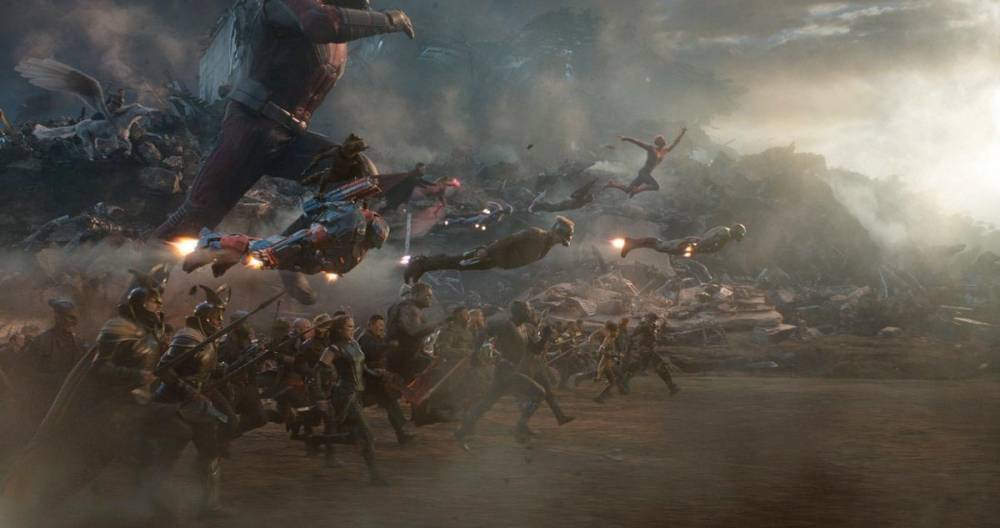
In selecting my final choice for the best films of 2019, I found myself drawn to the delicious irony of a delightful tie. After all, they are both grand epics of size and scope, as well as payoffs after years of rumors and hard work, and yet one is directed by an auteur of American cinema, while the other said director has criticized as “a glorified theme park attraction.” Yet even if they exist at two opposite ends of the cinematic experience, it’s hard to deny that both Avengers: Endgame and The Irishman deserve spots on this list. Let’s start with Endgame, as it’s the easiest to dissect. I was skeptical going into the grand payoff of the Marvel Cinematic Universe, as I’d grown cold and disillusioned with the stranglehold they’d developed on Hollywood filmmaking – and after three disappointing Marvel films in a row (Age of Ultron, Civil War, and Infinity War), my expectations were close to rock bottom. And yet, Endgame proved that the genre not only had a few tricks up its sleeve, but could use its formulaic, decades-long storytelling to deliver emotional pathos, weighty material, and actual thrills. On a deeper level, Endgame addresses questions of failure, on a massive scale: parents failing children, children failing parents, heroes failing the public, and beyond. It’s about sacrifice, and loss, and collective grief, and the toll of heroism. And yet, even without all that, it still delivers on the realities of filmmaking the same way David Lean and Steven Spielberg have, blending the commercial with the intellectual. The action sequences are clear and exhilarating, the laughs are timed for levity and catharsis, and the deaths of beloved characters come with a sense of pathos and payoff. I do not exaggerate when I say that this film took me on an emotional roller coaster in ways that most films do not – I laughed harder, cheered louder, and got misty-eyed more than I do at the average Sundance drama. It uses the DNA of crowd-pleasers like Star Wars and Titanic to work its audience like an orchestra, and it deserves to be respected for that. Avengers: Endgame is how you should make a Hollywood blockbuster, a well-deserved highest grossing film of all time, and even if Marvel and Disney fail to learn from their own success, this will still stand tall as one of the strongest, smartest outings in their ever-growing oeuvre. And I don’t feel bad about it in the slightest – after all, Siskel and Ebert included Who Framed Roger Rabbit, Back To The Future, and Superman: The Movie on their own lists. I’m just continuing in their spirit.
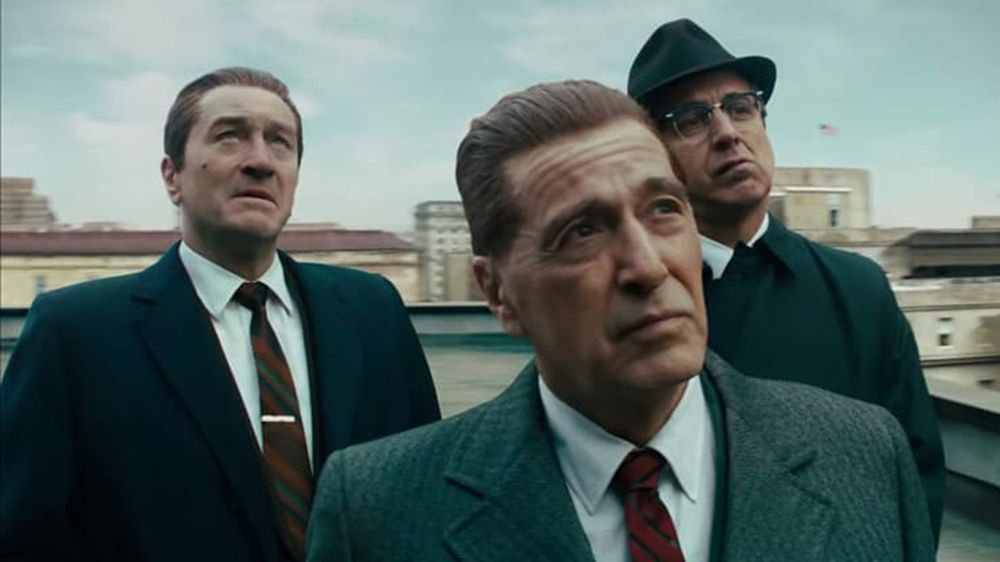
On the other end of the cinematic spectrum, Martin Scorsese has reminded the world once again why he is a master filmmaker, thanks to his grand epic of guilt and failure, The Irishman. Clocking in at a whopping 208 minutes, The Irishman never feels its length, thanks to Scorsese’s keen hand on the helm and Thelma Schoonmaker’s sharp eye in the editing booth. The Irishman is a film that could only be made by the Martin Scorsese of today, in the year of 2019. It is the story of a man, gifted in a unique career, who is forced to look back on his life and question the choices he’s made and the friendships he’s lost. It is the story of a man nearing the end of his career, a reflection on Scorsese’s own illustrious life and journey, and his own regrets along the way. Robert De Niro’s Frank Sheeran is a stand-in for the American Male of the 1950s, and in a way, the America of today. Scorsese tracks a story of decaying morality as a nostalgic American Dream crumbles around our characters, often in the background, and sometimes at their own hand. Faith, family , morality, and justice all crumble at the hands of the government, big business, and the military industrial complex. When Frank is finally forced to murder his best friend/father figure Jimmy Hoffa (played remarkably by Al Pacino, in a stunning return to form), it carries the same weight and repercussions as America’s involvement with the Bay of Pigs and Watergate. These are men who were taught to repress their feelings and act a certain way by the government, society, and beyond, and their own personal journeys to hell – be it Frank’s, Jimmy’s, or mobster and rival paternal figure Russell Bufalino (played strikingly reserved by Joe Pesci) – represents not a failure of a human code, or patriotic code. It is a failure of a moral, religious code, as taught to them by humans. It’s why they die alone, with their own children refusing to talk to them. Scorsese tells this story beautifully, with some of the best sets, costumes, cinematography, and sound you will see in any film, reminding us once again why he is the legend that he is. Scorsese’s message here is pretty clear: he is certainly capable of continuing to make great films. But he’ll never recapture the past, and this film is a touchstone marking the beginning of an end. Let’s savor it for what it is.
Original Review for Avengers: Endgame posted here
Original Review for The Irishman posted here
9. Once Upon A Time…In Hollywood

Once Upon A Time…In Hollywood is not only Quentin Tarantino’s most relaxing feature – it may be his most mature as well. It is the type of breezy film you can throw on one sunny Saturday afternoon and relish in, from its lazy, easy look at 1969 Los Angeles (often referred to as the last time America was truly happy, as the Manson murders, Watergate, and the downfall of the Civil Rights movement at the hands of the FBI would send us into a downward spiral that would last until today) to its charming, enjoyable characters. Tarantino has spoken of his goal to create the “ultimate hang-out film,” an ode to the subgenre that includes Ocean’s Eleven and Dazed and Confused. And for the most part, he succeeded. This is a love letter to all the classics most film lovers grew up on in their youths, acted out by two actors at the top of their game. Leonardo DiCaprio’s alcoholic, bipolar Rick Dalton is one of the funniest of his career, parodying the preening superstar and play-acting Westerns, police procedurals, and war epics. Meanwhile, Brad Pitt plays the buddy we all want, who looks great with his shirt off, knows how to comfort you when you’re down, and maybe (depending on your interpretation), is seeking redemption for his own horrific misdeeds. In his central dynamic of Rick and Cliff’s plight, Tarantino grapples with his own obsolescence – he wants to be Cliff, the charming, cool buddy we all know and love, but he knows he’s Rick, a relic of the past pushed out by the newest fad (this time it’s comic book movies). Tarantino knows this world cannot last. Violence permeates the backdrop of every scene, even if nothing happens until the finale. In reality, Sharon Tate (brought back to life beautifully and poetically by Margot Robbie) would actually be murdered. Nixon would order a crackdown on crime because of it. And the ensuing actions by the federal government would destroy the American Dream potentially forever. But that’s why Tarantino’s film ends with an alternate ending: this is a fairy tale. It is a time that cannot exist again, not unlike the legend of Camelot. And through Once Upon A Time…In Hollywood, Tarantino is not just giving Tate a chance to live the life she always wanted – it’s giving we, the audience, a chance to laugh and forget about our own troubles, and live in a world where we can laugh, drink, and play with our attractive best friends as the sun sets over the Hollywood sign.
Original Review for Once Upon A Time…In Hollywood posted here
8. Little Women
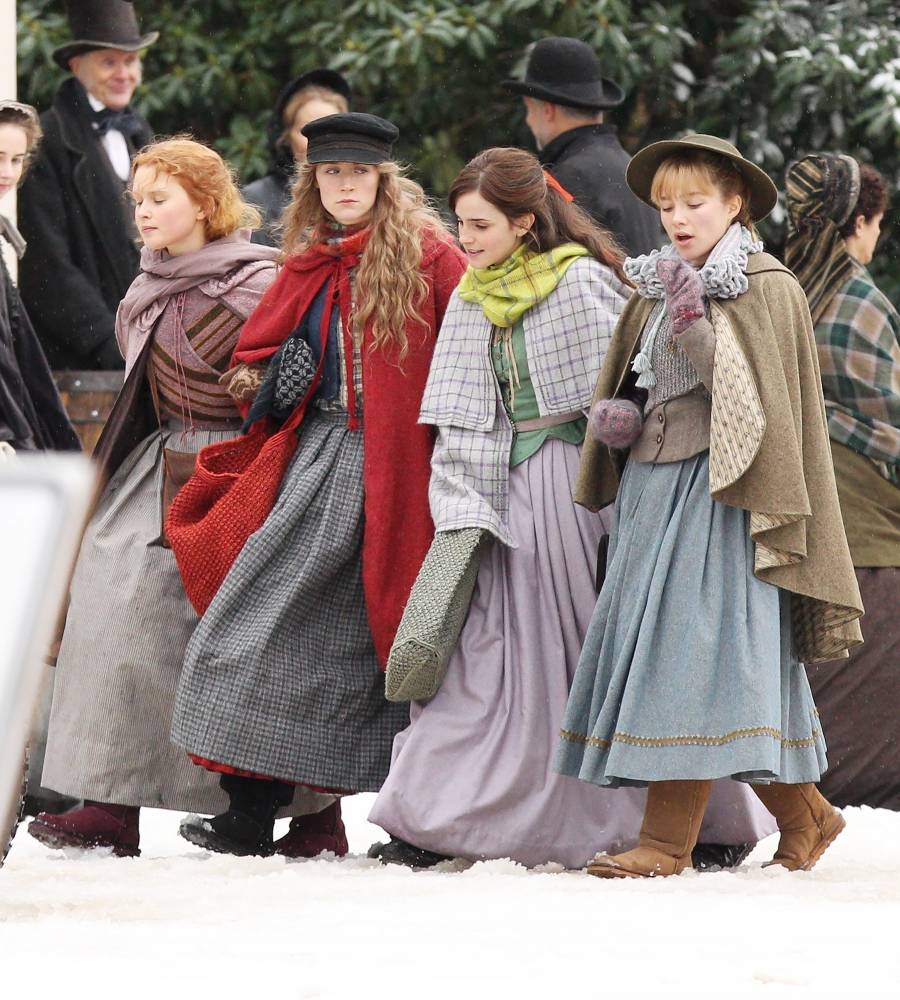
If you put a gun to my head and told me I’d have to live out the rest of my days in the filmography of one specific director, I’d probably pick Greta Gerwig. There is honestly no filmmaker in the business as charming, warmhearted, or decent as the young auteur, and her follow-up to #1 film of 2017 Lady Birdcertainly proves her talents. For Little Women is not only a great period piece, or a stunning treatise on the messy, complicated realities of womanhood (although it does both things quite well). It is, at its core, a warmhearted story of good people living nice lives, helping and interacting and bickering and growing the same way all people do. Gerwig writes and stages her characters with such love and such care, there is not a single one I don’t want to hug and coddle for the rest of eternity. Potential pretty-boy Laurie is played by Timothée Chalamet as a wayward, yet incredibly loving soul caught in the throes of unrequited love. Prissy Aunt March (a sassy Meryl Streep) may have some rough edges, but she loves her family and wants what’s best for them inside a broken, women-hating system. And in my favorite moment of the film, oft-maligned curmudgeon Mr. Laurence (the great Chris Cooper, pulling double duties on this list), is portrayed as a broken man forced to reckon with his worst mistake, breaking down at the sound of his late daughter’s piano being played once more. But at the heart of the film are the performances of the March sisters, and their realistic, lovely relationships. Watching Beth (Eliza Scanlen), Meg (Emma Watson), Amy (an unbelievably great and exceptionally weird Florence Pugh), and Jo (the eternally-perfect Saoirse Ronan, who has dominated these Top Ten lists all decade) laugh together, play together, perform together, fight together, and love together is nostalgic and real in a way most films struggle to be. This is a film that understands the way people – and more specifically and importantly, women – act, think, move, and feel. It understands the familial, loving bonds of sisterhood, and the plight of balancing love, wealth, and artistic passion at the same time. It is a lovely film, and one that I look forward to returning to time and time again.
Original Review for Little Women posted here
7. Parasite

Of all the films on this list, Parasite is the one I’ve revisited the most. I saw it once on a screener a friend of mine shared with me, which I greatly enjoyed. Then I saw it once in the theaters, and I was floored. And because of the growing admiration, I had to go a third time, to make sure I wasn’t hallucinating. And I was not. I was certainly not alone in my journey – Parasite was the film that took the U.S. by storm. It sold out at film festivals across the country, won numerous awards (including the Palme d’Or and the Oscar for Best Picture), and, in a truly shocking moment, sold out indie theaters and multiplexes inside rural Midwest cities and towns. I don’t know if you can fully comprehend how rare that is for a foreign film to accomplish. But as hard as it may be to believe, all the praise and hype is adamantly deserved, even if some audiences (including most of Hollywood) may not be aware of which family they most clearly resemble. Bong Joon Ho’s parable of income inequality and class structure within South Korean society (not that its story isn’t exactly universal) is stunning in its unique, entertaining vision. No director has so expertly combined the thematic and the commercial since Jean Renoir and Alfred Hitchcock graced the screen in the 40s and 50s. Part of what makes the film so great is that, thanks to its thematic through-line and “metaphorical” commentary, the film’s ever-changing genre never feels like tonal whiplash or a gimmicky “twist.” It is just as much a comedy as it is a tragedy, and as much a drama as it is a horror. Director Bong uses these shifting genres to reflect the shifting realities of our world. We cheer on the poor Kims as their scams to earn employment with the Parks get more and more hilariously over-the-top (the Peach Scene is one of the best-staged moments of the year), but the film never ceases to remind us that their actions have consequences. Meanwhile, the Parks aren’t evil because they are rich – indeed, their worst crime is ignorance, as their wealth has blinded them to the realities of those less fortunate. And yet, as much as we like all the characters, in spite of their flaws, we are aware, the minute the film takes a terrifying trip into the basement, that there is no happy ending here. When the system pits people against each other – rich against poor, poor against poor, and so on – the only outcome is bloodshed. Parasite is a brilliant, rule-breaking, and groundbreaking work, and it is easily one of the best films of the year.
Original Review for Parasite posted here
6. Wild Rose
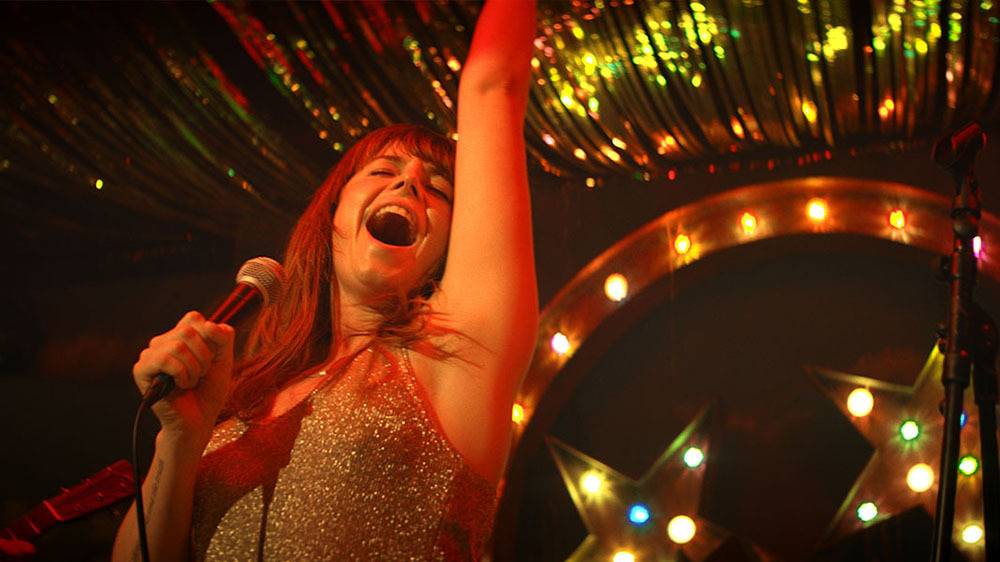
Wild Rose is another one of those films I didn’t quite anticipate when I entered the theater August of 2019. I’d had several acquaintances recommend it to me (including the great film writer Daniel Joyaux), but I didn’t know any of the actors, a single detail about the plot (other than it surrounded country music), or any of the music outside of an original song by Mary Steenburgen. And I couldn’t be happier that I didn’t know any of that, because it made it that much greater a surprise when the film left me on the floor. Wild Rose is like the British, country music equivalent of Inside Llewyn Davis. It’s a film about the desire to pursue one’s dreams while balancing the real-life responsibilities that can be seen as either a blessing or a curse. Jessie Buckley’s performance as Rose-Lynn Harlan is easily the year’s best, as the film follows her journey as a wannabe country singer recently released from prison who’s trying to balance a quest for fame with her responsibilities as a 23-year-old single mother. From the jump, the film eschews any doubt that Rose-Lynn lacks the talent or charisma to be a superstar – she clearly has the likable energy the music requires, and as the soundtrack solely consists of Buckley singing along to her tape deck, you know she has the pipes. Like Llewyn Davis before her, her greatest setback isn’t a lack of talent – it’s a personality problem. Rose-Lynn is still a youthful woman, dealing with her own selfish struggles and her inherent aversion to responsibility. The film is about watching her grow up as much as it is about her ability to utilize her talents. Meanwhile, another layer of conflict arises in her struggles with her past. While boozy, troubled convicts once had a monopoly on the country music market (their pain lent authenticity to their storytelling), it is clear that Rose doesn’t fit into the genre’s modern-day sterilized aesthetic. Yet despite her flaws, Rose-Lynn is in no way unlikable. Tom Harper’s careful, vivacious direction and Nicole Taylor’s emotional script have us cheer for Rose-Lynn every step of the way, as she traverses her own trauma surrounding her hometown and her evolution as an artist, a mother, and a human being. When she finally proclaims her love for her hometown, and puts her pain into music in the unbelievably great solo “Glasgow (No Place Like Home),” it’s a triumphant musical moment on par with “Falling Slowly,” “Shallow,” and “The Man That Got Away.” Wild Rose is the type of heartfelt, surprising film that makes me love what I do, and it is one that I look forward to returning to again and again (Lord knows I’ve already overplayed the album on Spotify).
Original Review for Wild Rose posted here
5. The Report

It is without question that Adam Driver was the most eclectic performer of 2019. He had six films released last year, and each featured a nuanced, intelligent performance that simply wowed the audience. My favorite, though, has to be The Report, the Driver-centered breakdown of the U.S. Torture Report. In an era of political division and hatred, The Report eschews political sides to condemn a broken system that spans two decades, thanks to a corrupt CIA and three consecutive Presidential administrations willing to cover it up. The film utilizes the slow-burn aesthetic of past efforts like The Insider and All The Presidents’ Men (I mean, of course there’s a scene set in a parking garage) not only because they share DNA in one man fighting the system, but because the subliminal coding makes it clear from the jump exactly how deep the level of deception and abuse goes. The Report carefully uses well-acted, carefully edited flashbacks to break down exactly how the Torture Program took shape, flourished, and was later covered up. We watch in graphic detail as mostly-innocent men are rounded up and tortured, under the direct supervision of two huckster snake oil salesmen who conned their way into a CIA contract (and played perfectly by Douglas Hodge and T. Ryder Smith). It exposes – and names names – the government bureaucracy that allowed this abuse to continue, and those culpable to escape blame, including former CIA Director and current CNN Never-Trumper John Brennan (played sinisterly and smartly by Ted Levine), current CIA Director Gina Haspel, George W. Bush (who was misled about the program by his Vice President and the CIA), former Chief of Staff Denis McDonough (a weaselly Jon Hamm), and former President Barack Obama. The film is scathing in its indictment and direct in its factual analysis, leaving no room for doubt that evil happened under our watch. But while The Report is hard to watch in its condemnation of the hate and evil that allowed this miscarriage of justice to occur, it is equally willing to stand up for brave Americans who understand that seeking justice and morality is the most American action you can take. Daniel Jones is an American hero whose pursuit of the truth gives us hope in the darkness. Driver plays the role with the same energy of a Jimmy Stewart/Gregory Peck protagonist, earthy and folksy and relatable, helping audiences both relate to his quest and desire to emulate his moral fortitude. And heroes can be found inside the Congress too, be they Democrat (Annette Bening’s Dianne Feinstein), or Republican (John McCain). The Report is a hard watch, but it is an important, investing, and beautiful watch as well. And it’s one of my favorite films of 2019.
Original Review for The Report posted here
4. Midsommar

I was lukewarm on Hereditary when it came out in 2018. Ari Aster’s tense, intimate family horror started out so strong and then went off the rails in the third act (first in a good way, then in a very bad way). Thankfully, his follow-up effort, Midsommar corrected almost every bad impulse on Hereditary, creating a moody, atmospheric nightmare that I strangely want to live in for all eternity. The level of craftsmanship and talent on display can be found from its very first scene, a terrific short film in and of itself that finds horror – as Aster always does – in the terror of real-life tragedy. The pacing, acting, and cinematography of the sequence, as a couple fights and argues over text while Dani (Florence Pugh, giving one of the year’s best performances) tries to get her sister to respond to her phone calls. The tension rises until the worst is revealed: her depressed sister has killed herself, along with both her parents. That’s how this film starts. But Midsommar is not just a film about grief – it is a testament to toxic relationships. It is about how it feels to be in a toxic, gaslighting relationship, and about how being with the wrong person who makes you feel worthless (here represented by Jack Reynor’s wonderfully assh*lish Christian) is in itself a kind of horror. In line with films like The Wicker Man (the original, not the bee-infested remake), the message is clear: while the cult-like behavior of the commune is sickening, at least they are freer than the corrupt, American-centric douchebags that accompany Dani and Christian on their trip. Like most films of this sort (see: The Witch), the commune represents freedom, and understanding, and love, in its own f*cked up way. The final image of a grinning Dani in front of a raging fire is both a sign of freedom as much as it is a sign of insanity. But even if the film’s message isn’t that deep, or the metaphor is inherently flawed, it’s still an expert example of atmospheric tension. It is a gorgeous world to look at, luscious in its green, sunny scenery, and yet clearly hiding a darker, disturbing secret. The fun of Midsommar is waiting for that darkness to seep through, even if you know you have another two hours to go. Aster’s filmmaking is assured and perfect, and it helps save Midsommar the same fate as its predecessor. I hear that there is a Director’s Cut that’s even better, and fleshes out the relationships, fights, and cult-like activities in better detail. But I don’t need it. On its own, Midsommar stands strong as one of the year’s best horror films, and one of my favorite film experiences in all of 2019.
Original Review for Midsommar posted here
3. A Beautiful Day In The Neighborhood

On paper, A Beautiful Day In The Neighborhood should have been unnecessary and extraneous. We already had Won’t You Be My Neighbor?, the 2018 documentary about the life and work of Fred Rogers, the children’s show host who evangelized goodness to generations of youths. Yet that’s precisely what a great film – even a “predictable” biopic – can do. It boils down an essential moral and incredible story into a new, inspiring way, and allows its actors to reach through that thin curtain to grab our heartstrings and refuse to let go. Heller manages to coax her performers into giving all-time great performances. Matthew Rhys channels It’s A Wonderful Life’s George Bailey in his heartbroken Lloyd, while Tom Hanks not only embodies (not imitates) Mister Rogers, he channels the spirit through Clarence the Guardian Angel for good measure. But what’s more impressive is the way she uses these performances to tell her story. Heller weaves the story of a cynical reporter’s interview with a “living saint” into a beautiful parable of forgiveness, and family, and love, and how to channel one’s anger into something positive. It’s all the lessons children should be taught and adults need to remember, and yet have been lost somewhere along the way. Furthermore, she never settles for standard biopic fare either – in keeping with the film’s fable-esque properties, she transforms the story into an anecdote Mister Rogers shares on his popular television show – meaning the opening theme song, puppet-based transition shots, lovely segues through video tapes on Picture-Picture, and a bizarre-ass trip to the Land of Make Believe. By using Fred Rogers’ vehicle for goodness to tell the story, Heller transcends the traditional, lazy route of the “true story” to get to the heart of why this man was so good and so important, and the way he can inspire that goodness in us, even in our darkest moments. Only two films in 2019 made me sob uncontrollably in 2019, and the moment the film eliminated its soundtrack for a proper “minute of silence,” as Tom Hanks looks down the barrel of the camera as if to say “everything will be all right,” I broke down completely. This film isn’t a fluke. It is one of the loveliest films I’ve seen in a long time.
Original Review for A Beautiful Day In The Neighborhood posted here
2. The Farewell

I first saw The Farewell on a chilly afternoon in early May during the Cinetopia Film Festival. After its successful Sundance premiere, I thought I’d give it a go on the off chance that it became a surprise Oscar sensation. While the film shockingly never created awards traction, I’m still glad I went, because Lulu Wang’s story about family, immigration, tradition, culture, death, and life is a film that transcends time and genre. It is a universal story, and yet hyper-specific – the best kind of story, in my opinion. “Based on a true lie,” the story follows Wang’s own journey (here portrayed by a surprisingly dramatic, wholeheartedly real Awkwafina) as she learns that her beloved grandmother is not only dying of cancer, but the family has elected not to tell her, and are forcing her cousin into marriage to arrange one final farewell for their beloved Nai Nai. As she embarks on her trip, she struggles with her professional failings, an ever-changing world that moves on without her, and what it means to be Chinese, to be American, and to be Chinese-American. The Farewell is about the bonds of family, and the little lies they tell each other out of love and to keep each other going. Awkwafina’s Billi is lying to her family about everything – she lies to her grandmother about her health, she lies to her family about her fellowship, and she lies to herself about her own happiness. And yet these lies may simply be a symbolic gesture, for as funny as it is to see the lengths the family goes to in order to shield their matriarch, Zhao Shuzhen fills the role with a wisdom that comes from intimacy. It is entirely possible she already knows the truth about herself, and is going along with it for the sake of the family. Ultimately, the lie doesn’t matter. It is a jumping off point to explore the rich history of one Chinese family as they spread their wings, and their ultimate reunion in the face of life (a wedding) and death (a terminal illness). The final reveal, after 90 minutes of understanding, bonding, and loving these people as if they are our own sisters, aunts, and cousins (Shuzhen’s performance as Nai Nai certainly reminds me of my own grandmother), is one of the best moments of the year. It only becomes so after earning its status the hard way – by making a perfect, lovely movie through and through.
Original Review for The Farewell posted here
1. Climax

Man, I really didn’t expect to be here today. Having never seen a Gaspar Noé film (currently famous for his Netflix smut film Love), I expected to, at best, appreciate Climax when I viewed it over a year ago on a cold March night. I honestly thought I’d hate it. And yet, here we are. No film from 2019 has stuck with me in quite the same way as Climax, and I’m not sure if that’s a good or bad thing. Not The Farewell, not Parasite, not Hollywood, and not The Irishman (Cats, maybe, but that’s for different reasons). Climax is a rare film, the type of transgressive, abusive cinema that legends like Paul Verhoven, Peter Greenaway, Ken Russell, and Luis Buñuel used to make. It uses its off-putting nature to tell a story of moral, spiritual decline, and it does so in beautiful, terrifying detail. Equal parts comedy, tragedy, horror, and mystery, Climax challenges its viewers with a modern-day parable based on the Tower of Babel. It seeks to explore our modern-day habit of animalistic tribalism, and our desire to seek and destroy the Other. As a dance troupe realizes during a party on a cold December night that someone has put LSD in their sangria, we watch as the room falls apart thanks to their own base instincts. Sex and violence become their new driving force, they murder suspected druggists without a trial, children are accidentally killed (to the amusement of the crowd), and siblings aggressively explore their unhealthy relationships. The reactions and disasters feel real because Noé lets them explore their characters honestly, without the aid of a script, and it makes the humor and horror that much more realistic and heartbreaking. And breaking up these terrifying anecdotes and moments of ironic, sickening levity, Noé seeks to remind us of his own talent as a director. The most-tense, skin-crawling sequences are shot in one long, sweeping take through miles and miles of hallways, giving the viewer a unique sense of space and understanding. The film consists of only hard cuts or refusals to release, disorienting the viewer as much as the drugged-out characters. And in the film’s greatest detail, the troupe’s dances are both a dazzling escape and a horrifying climax to the action – the opening rehearsal is one of the greatest sequences I have ever seen on film. Climax is a trying film. It is the type of film I often despise. And yet, here I am, calling it the Best Film of 2019, and one of the best I’ve seen, period.
Original Review for Climax posted here
I hope you all enjoyed this trip down memory lane with the Best Films of 2019! If you haven’t seen these eleven incredible films yet, please make an effort to do so. In response to Covid, I’ll even post sites you can currently stream them on down below. After all, I want these filmmakers to have the opportunity to create whatever lovely, bizarre, and frightening story they desire for as long as they can. In the coming days, I’ll be finishing off my “Best Performance by the Oscar nominees” piece for you all to peruse, before turning my attention to the Sacred Wall Awards, my look at the best performances, scenes, and more from the year. In the meantime, you can check out my overall rankings of every film from 2019 that I watched right here, at The State of the Year. Thanks for reading, and I hope you get a chance to see some great films soon, at home, at the drive-in, or God willing, at the theaters. Safe screening, my friends!
Avengers: Endgame is currently streaming on Disney+
The Irishman is currently exclusively available on Netflix, although will be coming to the Criterion Collection this November
Once Upon A Time…In Hollywood is currently streaming on Starz, as well as playing on the premium cable channel. It is available to rent on most platforms
Little Women is currently streaming on Starz, as well as playing on the premium cable channel. It is available to rent on most platforms
Parasite is currently streaming on Hulu
Wild Rose is currently streaming on Hulu
The Report is exclusively available on Amazon Prime
Midsommar is currently streaming on Amazon Prime and Kanopy, while the Director’s Cut is available for purchase on Apple TV
A Beautiful Day In The Neighborhood is currently streaming on Starz, as well as playing on the premium cable channel. It is available to rent on most platforms
The Farewell is currently streaming on Amazon Prime and Kanopy
Climax is currently streaming on Amazon Prime


Add Comment